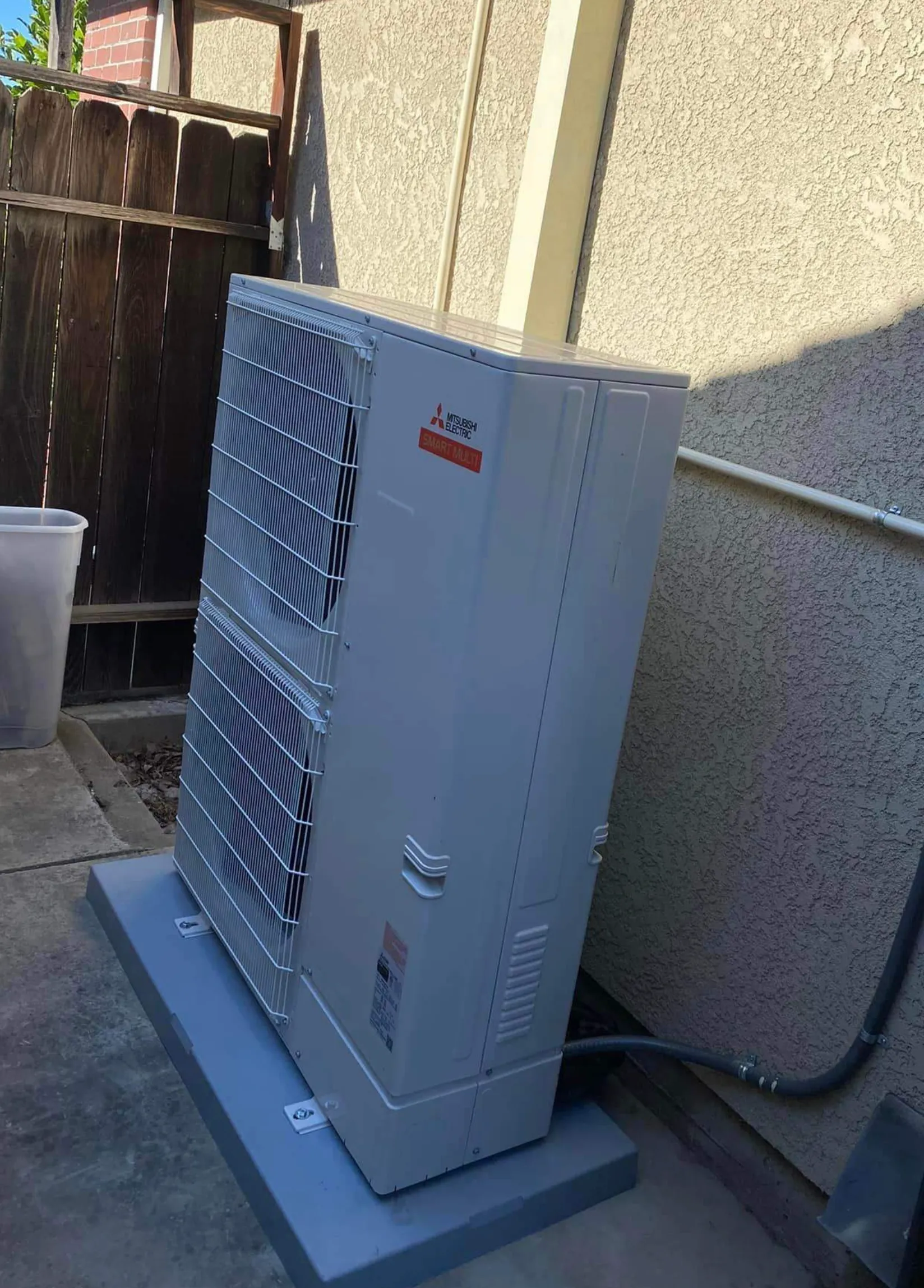
I believe most homeowners start with the same practical question: What would you expect to pay for a new HVAC system and AC unit? The honest answer starts with the house, the ductwork, the electrical setup, the equipment size, and Sacramento summer comfort.
For a typical Sacramento area home, a straightforward central AC replacement often lands somewhere around $8,500 to $16,000. A full heating and cooling replacement, meaning AC, furnace or air handler, indoor coil, thermostat, permits, and labor, commonly runs about $12,000 to $25,000. Bigger homes, older duct systems, high efficiency heat pumps, difficult attic access, and electrical upgrades can move that number higher.
Super Brothers Plumbing Heating & Air works with homeowners across Sacramento, San Jose, and nearby communities who want a clear number without getting buried in equipment talk. A good estimate should explain what is being replaced, what can stay, and what would create problems later.
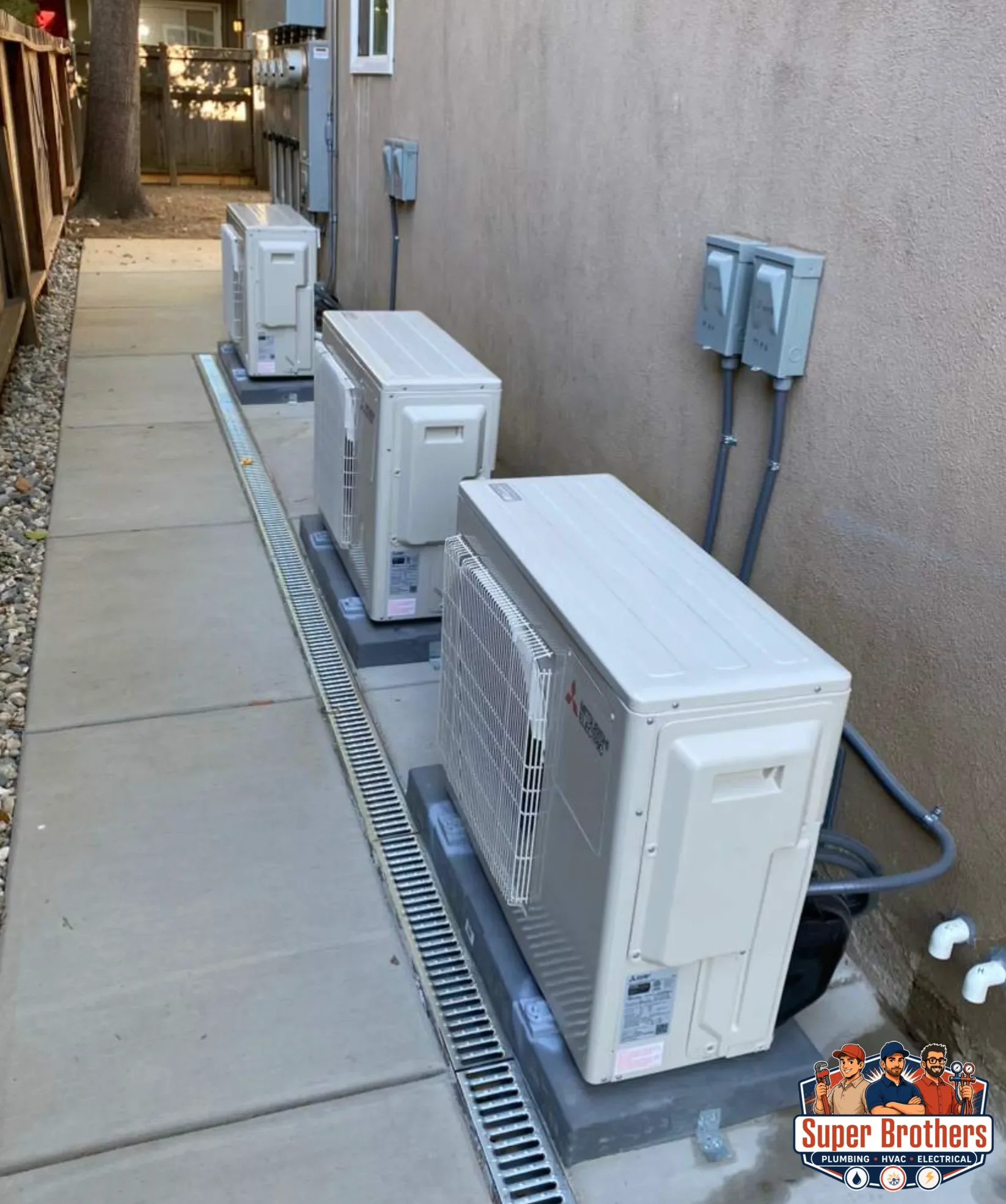
Realistic HVAC and AC price ranges
Searching for New Ac Unit Cost, usually homeowners are thinking about the outdoor condenser only. In the field, the outdoor unit rarely tells the story. Here are practical ranges homeowners can use for planning before a technician looks at the home.
- Central AC replacement only: usually about $8,500 to $16,000 when the furnace, ductwork, and electrical setup can stay.
- Full new hvac unit replacement: often about $12,000 to $25,000 when the AC and heating side are replaced together.
- Heat pump system replacement: commonly about $13,000 to $26,000, with equipment type and electrical work changing the number.
- Ductless mini split installation: often about $5,500 to $12,000 for one zone and about $12,000 to $28,000 for larger multi-zone homes.
- Ductwork or electrical upgrades: can add a few thousand dollars, and older attic systems can push the job higher.
What would you expect to pay for a new HVAC and AC? In East Sacramento, Land Park, Pocket-Greenhaven, Natomas, Arden-Arcade, and Carmichael, the answer often is different because the homes were built in different eras. A 1950s ranch with tired ducts is priced differently than a newer Natomas home.
Why one estimate can be thousands different from another
The biggest price driver is usually the scope, not the brand name on the equipment. A contractor replacing only the outdoor AC may show a much lower number than a contractor correcting airflow, replacing an indoor coil, changing a line set, pulling a permit, and addressing a weak return duct. Those are very different jobs. System size, access, and layout matter too. A larger two-story home in Elk Grove or Roseville may need more capacity or duct improvements to cool the upstairs. Some Sacramento homes have tight crawlspaces, low attic clearance, old platforms, or equipment tucked behind fencing, while San Jose homes can add compact lots and older mechanical closets.
Ac Replacement Cost versus full HVAC replacement
Ac Replacement Cost can mean a few different things, so it helps to separate the terms. Replacing only the cooling equipment may make sense when the furnace is newer, the blower is strong, the coil can be properly matched, and the ductwork is moving enough air. That keeps the job narrower.
A full HVAC replacement makes more sense when the furnace is old, the blower is weak, the indoor coil is leaking, or the system has been patched together for years. Many homeowners also replace both sides at once to avoid paying twice for overlapping labor. For a full matched system, homeowners should expect a larger upfront number than AC-only work, but the result is usually cleaner. The technician can size the system as one package, check airflow, set the thermostat correctly, and reduce compatibility headaches.
ENERGY STAR notes that properly sized equipment is important for comfort and performance. Oversized systems can cycle too often, and undersized systems can run too long. Either mistake can make a brand-new system feel disappointing.
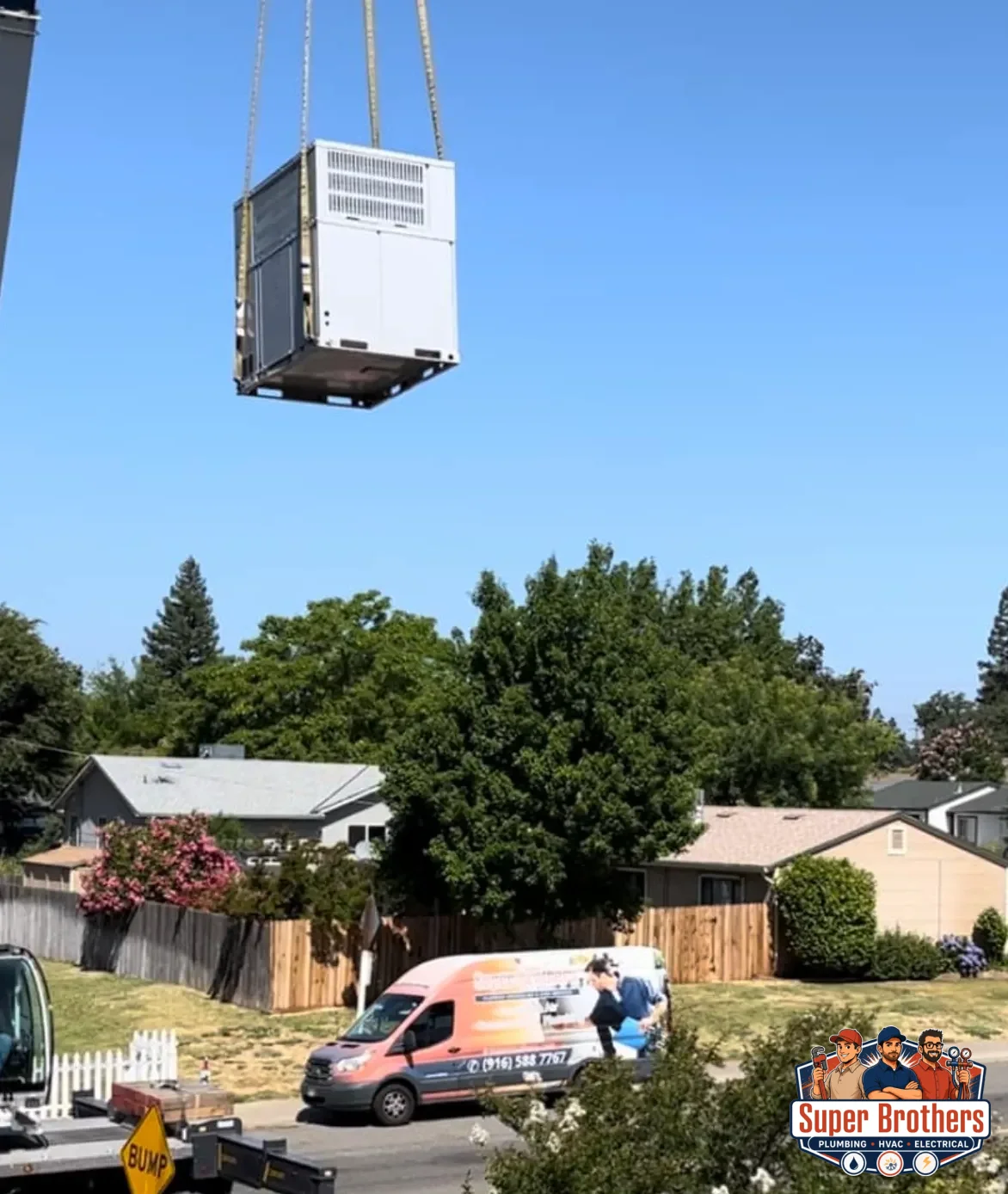
Mini split vs central HVAC cost
The mini split vs central cost discussion usually starts with ductwork. If your home already has usable ducts, central HVAC can be the cleaner choice for whole-home comfort. If your home has no ducts, damaged ducts, an addition, a garage conversion, or a stubborn upstairs room, a ductless mini split can make a lot of sense.
A single-zone mini split is usually less than replacing a whole central system. A multi-zone ductless setup can cost as much as central HVAC, and sometimes more, because each indoor head needs placement, line routing, drainage, electrical work, and finish detail. The layout of the house matters a lot.
Mini splits can be excellent for homes near Midtown, Curtis Park, Oak Park, and older Sacramento neighborhoods where adding ducts would be messy. Central systems still feel more natural for families who want one thermostat and consistent airflow through the whole home.
the U.S. Department of Energy describes ductless air-source heat pumps as a flexible heating and cooling option for homes without existing ductwork. That flexibility is useful, but it still has to be designed well. Bad placement can leave one room comfortable and another room annoyed.
Warning signs that replacement is getting close
Most systems give warning signs before they quit completely. The house takes longer to cool, the air from the vents feels weaker, the outdoor unit gets louder, or the system starts tripping the breaker. A unit that runs all afternoon and still cannot pull the house down at night is telling you something.
High bills are another clue, especially when your habits have not changed much. Dirty coils, low refrigerant, failing motors, leaking ducts, and worn capacitors can all waste energy. Uneven rooms also deserve attention because replacing equipment without checking airflow can leave the same room hot after the new unit is installed.
Common causes behind AC failure
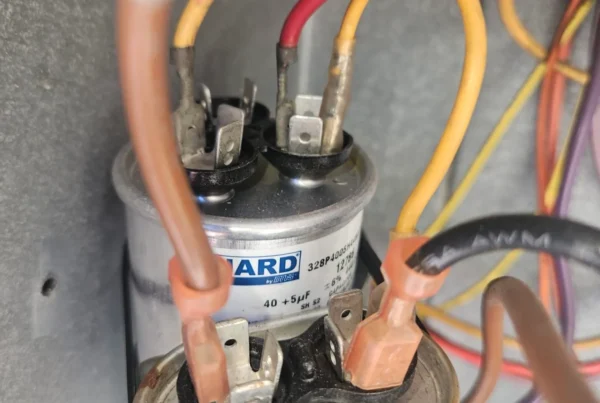
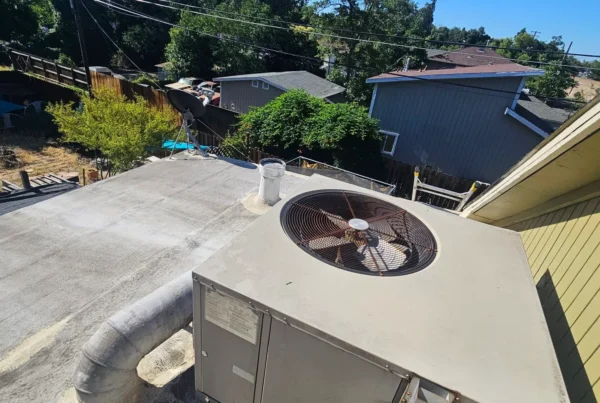
Sacramento heat is hard on cooling equipment. Long run times expose weak capacitors, dirty condenser coils, tired contactors, aging motors, and refrigerant problems. Outdoor units also collect cottonwood, dust, leaves, pet hair, and whatever the wind decided to donate that week.
Inside the home, airflow problems are common. A clogged filter can slow air across the coil, leaky ducts can send paid-for cooling into the attic, and a restricted return can make the system work harder than it should.
the U.S. Department of Energy points to filters, coils, fins, and refrigerant lines as regular maintenance items for efficient AC performance. That lines up with what technicians see every summer. Small maintenance issues can turn into bigger repair calls when the equipment is already old.
What a professional HVAC visit should include
A proper replacement visit should not start and end with a tape measure outside. The technician should look at the existing equipment, thermostat location, filter setup, duct condition, electrical disconnect, breaker size, condensate drain, refrigerant line routing, and access to the installation area. The home itself matters as much as the unit.
Expect questions about comfort problems. A good technician will ask which rooms run hot, how long the system runs, how old the equipment is, and what repairs have already been done. On replacement estimates, the conversation should also cover equipment options, efficiency level, heat pump choices, duct repairs, permits, project timing, and utility requirements.
Safety, refrigerant, gas, and permit considerations
HVAC work touches electricity, refrigerant, airflow, drainage, combustion safety, and sometimes gas venting. That is why replacement is not a good handyman experiment. A loose electrical connection, poor drain setup, incorrect refrigerant handling, or bad furnace venting can create real trouble.
the EPA requires Section 608 certification for technicians who maintain, service, repair, or dispose of equipment that could release regulated refrigerants. Homeowners do not need to memorize refrigerant rules. They do need a contractor who handles that side properly.
Permits are another piece of a clean installation. Requirements can vary by city and project type, but a replacement that involves heating, cooling, electrical, gas, or major equipment changes should be handled carefully. Sacramento, San Jose, and surrounding cities can each have their own inspection process.
When repair makes sense
Repair can be the right call when the system is not too old, the repair is isolated, and the rest of the equipment is in decent shape. A failed capacitor, contactor, thermostat, drain issue, or dirty coil can often be corrected without replacing the whole system. That is especially true when the unit has been maintained and cools well after the repair.
Repair also makes sense when the homeowner is not ready for a larger project and the risk is reasonable. A $400 repair on a younger system feels very different from a $2,500 repair on equipment that is already limping.
When replacement is the smarter call
Replacement starts looking smarter when repairs are frequent, refrigerant leaks are present, the compressor is failing, or major parts are no longer worth the money. Systems that are 15 to 20 years old can still run, but the question becomes how much comfort and reliability you are buying with each repair. At some point, the repair budget starts acting like a down payment you never get back.
What would you expect to pay for a new HVAC and AC? If the current system is old, loud, uneven, expensive to run, and using parts that are getting harder to justify, the replacement number may be easier to accept. It should still be explained clearly, line by line, because a homeowner deserves to know where the money is going.
Energy use and local rebate conversations
Sacramento homeowners pay close attention to summer electric bills. That makes efficiency part of the cost conversation, even when the upfront price is the first thing people ask about. A higher efficiency system can cost more at installation, but it may reduce run time and improve comfort when the ductwork and sizing are right.
SMUD lists heating and cooling rebates for qualifying heat pump systems, with program rules and funding subject to change. In PG&E areas, homeowners can review current offers through PG&E. Rebates should be checked during the estimate, not assumed after the job is done.
Heat pumps are getting more attention in California because they can provide heating and cooling from one system. They are not automatically the right fit for every house, panel, duct layout, or budget. A practical conversation should include comfort, utility territory, electrical capacity, gas equipment, rebates, and long-term plans for the home.
Maintenance that actually helps after replacement
A new HVAC system still needs attention. It will not stay clean just because the invoice was painful. Sacramento dust, pollen, pets, and long cooling seasons can load up filters faster than homeowners expect.
- Check the air filter every month during heavy use and replace it when dirty.
- Keep plants, storage bins, and debris away from the outdoor unit.
- Do not close a bunch of supply vents to force air into other rooms.
- Pay attention to new noises, water around the indoor unit, or weak airflow.
- Schedule maintenance before peak summer when appointment times are easier to get.
Small habits help protect the investment. They also give the technician a cleaner system to evaluate during tune-ups.
Why local experience matters
Local experience matters because Sacramento houses are not all built the same. A contractor may see older ducts in East Sacramento, hot second floors in Natomas, tight attic access in Land Park, and newer high-efficiency expectations in Folsom or Elk Grove. The fix has to match the building, not a sales sheet.
San Jose adds another layer with tighter lots, older homes, and different utility territory. Super Brothers looks at the equipment, the air moving through the home, the condition of the old installation, and the practical budget before giving homeowners a direction. The goal is a system that starts, runs, drains, heats, cools, and can be serviced without turning every future repair into a wrestling match.
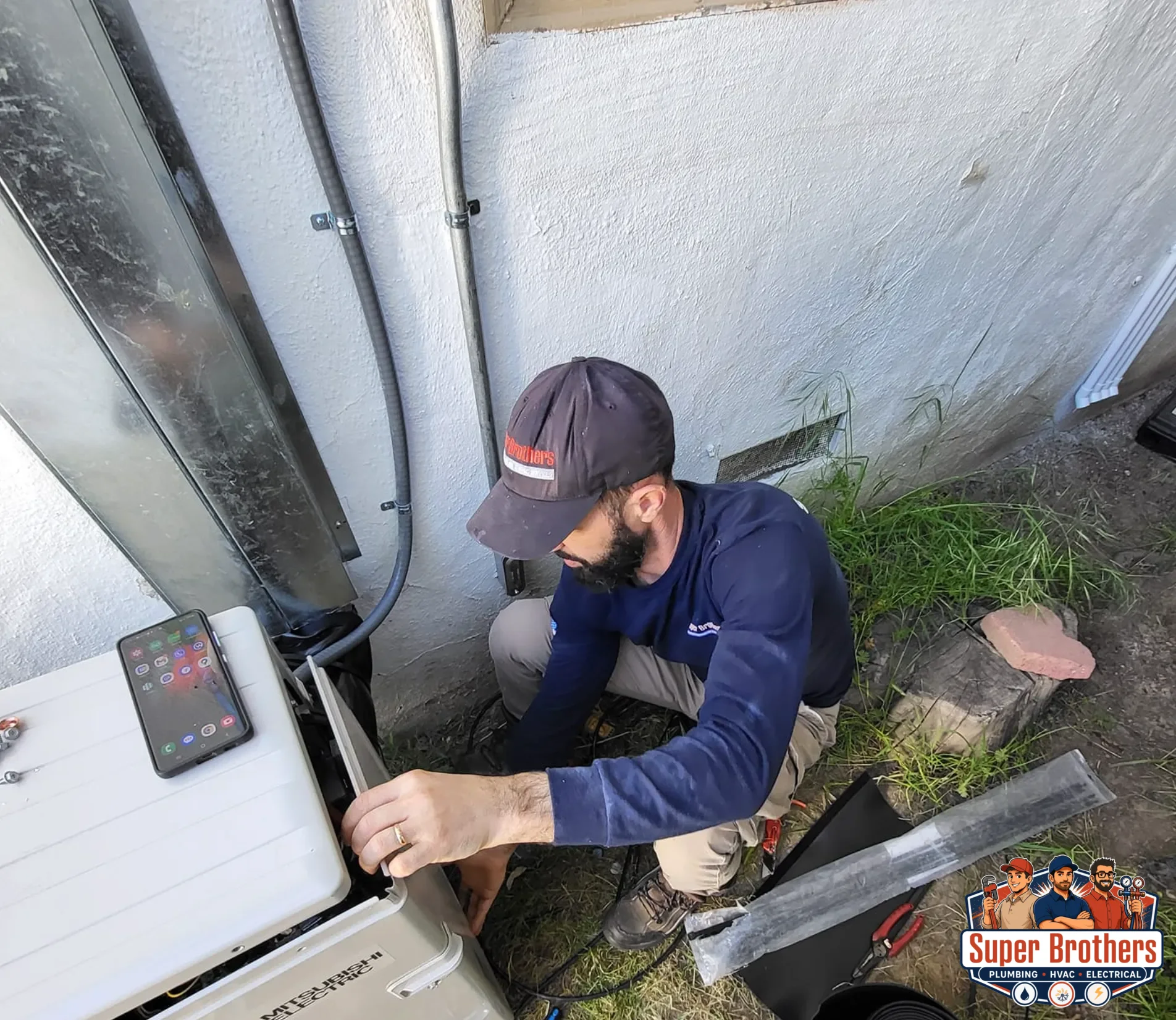
FAQ about HVAC and AC replacement cost
How much is a new AC unit in Sacramento?
A central AC replacement in the Sacramento area often runs about $8,500 to $16,000 when the existing furnace, ductwork, and electrical setup can stay. The final number can change after the technician checks equipment size, access, airflow, permits, and the indoor coil.
Is it cheaper to replace only the AC?
Yes, replacing only the AC is usually cheaper than replacing the full HVAC system. It only makes sense when the furnace or air handler is in good condition and the indoor coil, blower, and ducts can support the new cooling equipment.
Are mini splits cheaper than central AC?
A single-zone mini split is often cheaper than a full central HVAC replacement. Multi-zone mini split systems can get close to central HVAC pricing because each indoor zone needs equipment, line routing, drainage, electrical work, and finish detail.
Should I repair or replace an older AC?
Repair makes sense when the problem is minor and the system is otherwise reliable. Replacement becomes more practical when the unit is older, repairs are frequent, refrigerant leaks are present, or comfort problems keep coming back.
Do Sacramento homeowners need permits for HVAC replacement?
Many HVAC replacement projects require permits, especially when heating, cooling, electrical, gas, or major equipment changes are involved. The exact requirement can vary by city and project scope, so it should be reviewed before installation starts.
Can rebates lower the cost of a heat pump HVAC system?
Sometimes. Rebates depend on utility territory, equipment qualifications, income rules in some programs, contractor participation, and available funding. Homeowners should verify current rebate details during the estimate.
A practical next step
What would you expect to pay for a new HVAC and AC? For many Sacramento homeowners, the useful answer comes after someone checks the equipment, ducts, access, electrical setup, and comfort complaints in person. Online ranges can help you plan, but a real estimate should explain the house in front of the technician.
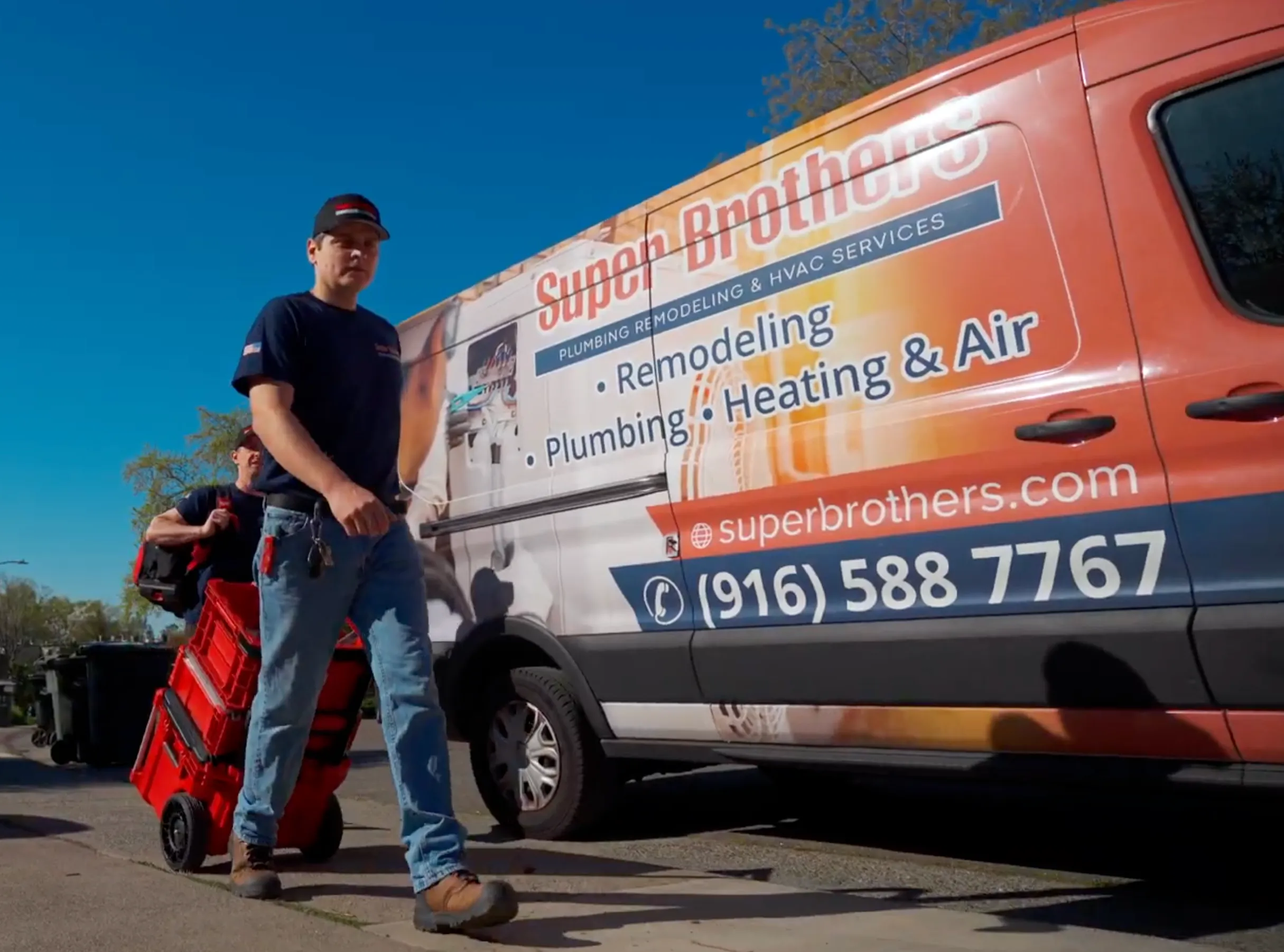
Super Brothers Plumbing Heating & Air can help homeowners compare repair, AC replacement, heat pump options, mini splits, and full HVAC replacement without turning the visit into a pressure appointment. If your system is old, loud, uneven, or barely making it through summer, start with a clear inspection and a written scope. Good HVAC work is not mystery work.