$5k Rule
If your heating or cooling system just gave up during a Sacramento heat wave or a chilly Bay Area morning, the first question is usually simple: should you repair it or replace it? That is where the $5,000 rule for HVAC can help. It is not a magic answer, but it gives homeowners a quick way to think clearly before spending money.
The $5,000 rule says to multiply the age of your HVAC system by the estimated repair cost. If the number is under $5,000, repairing the system may make sense. If the number is over $5,000, replacing the system may be the smarter long-term move.
Here is the simple formula: age of system x repair cost = decision number. For example, if your air conditioner is 8 years old and the repair is $400, the number is $3,200. In that case, a repair may be reasonable if the system has been dependable. Now flip the situation. If your heat pump or AC is 14 years old and the repair is $900, the number is $12,600. That does not automatically mean you must replace it today, but it is a strong sign that pouring more money into the old unit may be like putting premium tires on a car with a dying transmission.
Why Homeowners Use the $5,000 Rule
HVAC systems are not cheap, and nobody wants to replace one before they have to. At the same time, nobody wants to keep paying for repairs on a system that is already halfway out the door. The $5,000 rule gives you a quick gut check when emotions are high and the house feels like a toaster oven.
This rule is especially useful for older systems because age matters. A small repair on a newer system is usually normal home maintenance. A large repair on an older system can be the start of a pattern where one fix leads to another, then another, then another. Think of it like an older smartphone. Replacing the screen might make sense if the phone is two years old and still works well. But if the battery is weak, the storage is full, the camera is blurry, and the phone still has a charger nobody sells anymore, it may be time to upgrade.
How to Calculate the $5,000 Rule
The math is simple enough to do on your phone while the technician is still there. Take the age of your HVAC unit and multiply it by the repair estimate. The result gives you a rough number to compare against $5,000.
For example, a 6-year-old system with a $600 repair equals $3,600. That usually points toward repair, assuming the equipment has not had repeated issues. A 12-year-old system with a $700 repair equals $8,400, which points toward replacement.
A 15-year-old furnace with a $500 repair equals $7,500. A 10-year-old AC with a $1,200 compressor-related repair equals $12,000. In both cases, the repair might get the system running again, but the bigger question is how long the comfort will last.
The $5,000 rule works best as a starting point, not the final word. It should be paired with the condition of the system, energy bills, repair history, comfort problems, warranty coverage, and your plans for the home. A good HVAC contractor should explain those factors clearly, not rush you into the most expensive option.
When Repair Usually Makes Sense
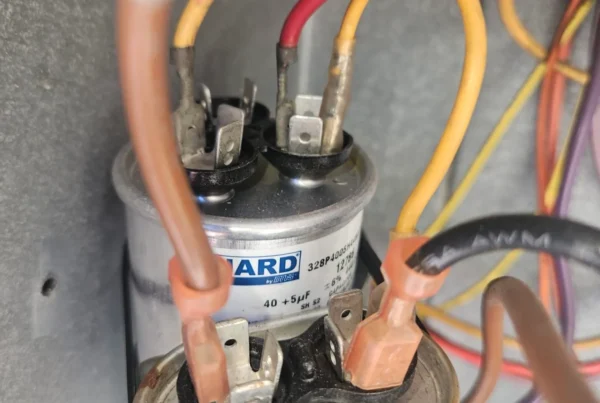
Repair can be the right call when the system is still fairly young and the issue is isolated. A bad capacitor, clogged drain line, worn contactor, thermostat issue, or simple airflow problem does not always mean the whole system is finished. Sometimes your HVAC just needs a tune-up, not a retirement party. Repair may also make sense if the system is still under parts warranty. In that case, your main cost may be labor, diagnostics, or related work. If the unit has been maintained and the repair is modest, replacing the full system may be unnecessary.
- Repair often makes sense when the unit is under 10 years old, the repair is affordable, comfort is still good, and the system has not been breaking down repeatedly.
- Replacement becomes more attractive when the unit is older, the repair is expensive, energy bills are rising, rooms feel uneven, or the system uses outdated parts or refrigerant.
In Sacramento, repair can be a practical choice if your AC has handled past summers well and this is the first real problem. In the Bay Area, repair may also be reasonable for homes with lighter cooling loads, especially in milder microclimates. A system that runs less often can sometimes stretch longer than one fighting triple-digit heat every afternoon.
When Replacement Usually Makes More Sense
Replacement starts to make more sense when repairs are expensive and the system is already past its prime. ENERGY STAR suggests considering replacement when a heat pump or air conditioner is more than 10 years old. Furnaces can last longer, but age still matters when repairs get serious.
Another sign is comfort trouble. If the upstairs rooms are hot, the downstairs rooms are cold, the system runs constantly, or the thermostat feels more like a suggestion than a command, there may be bigger issues. Your HVAC should not need a motivational speech to cool the house.
Rising energy bills are another clue. Older systems can lose efficiency as parts wear, coils get dirty, ducts leak, and motors work harder. Even if the system still turns on, it may be using more energy than it should to deliver less comfort than you deserve. Replacement may also be wise if a major component fails. Compressor repairs, heat exchanger problems, refrigerant leaks, blower motor failures, and control board issues can get expensive fast. When those repairs happen on an older unit, the $5,000 rule often points toward putting that money into a new system instead.
Why Northern California Homes Need Local HVAC Advice
Northern California is not one-size-fits-all when it comes to heating and cooling. Sacramento summers can push AC systems hard, especially in older homes with attic ductwork and limited insulation. A unit in Elk Grove, Roseville, Citrus Heights, Folsom, or Natomas may live a much harder summer life than one near the coast.
The Bay Area has its own personality. Homes in San Jose, Concord, Walnut Creek, and Livermore can see serious heat, while San Francisco, Daly City, Oakland, and parts of the Peninsula may deal more with mild temperatures, fog, moisture, and comfort balancing. That means the same HVAC rule can lead to different decisions depending on the home.
Older homes in Sacramento and the Bay Area may also have duct issues. Leaky, undersized, or poorly insulated ducts can make a new system underperform, and they can make an old system look worse than it really is. Before making a big decision, it helps to know whether the problem is the equipment, the ductwork, the thermostat, the electrical side, or the home itself.
Permits and code requirements also matter in California. HVAC replacement is not just swapping boxes and calling it a day. Depending on the project, the home may need permit handling, duct testing, HERS verification, electrical work, drainage updates, or other code-related steps.
The Heat Pump Question in Sacramento and the Bay Area
Heat pumps are becoming a bigger part of the HVAC conversation in California. A heat pump can provide both heating and cooling, which makes it a strong fit for many Northern California homes. Instead of creating heat the way older electric resistance systems do, a heat pump moves heat from one place to another.
For many homes, that can mean efficient comfort in both winter and summer. The U.S. Department of Energy notes that today’s air-source heat pumps can reduce electricity use for heating compared with electric resistance heating. They can also provide cooling during warm months, which makes them practical for mixed climates like ours.
Sacramento-area homeowners should also check local utility programs before deciding. SMUD has offered rebates for qualifying energy-efficient heat pump HVAC systems installed by qualifying contractors. Rebate amounts, program rules, and funding can change, so it is smart to check the current program before signing a contract.
Bay Area homeowners should keep an eye on local clean-air rules as well. The Bay Area Air District has listed compliance dates affecting certain gas-fired appliances, including furnaces. These rules can influence long-term replacement planning, especially if your current furnace is already older and repairs are getting expensive.
The $5,000 Rule Is Helpful, But It Is Not the Whole Story
The $5,000 rule does not know your home, your comfort needs, your budget, or your plans. It does not know if you are staying in the home for 15 years or getting ready to sell next spring. It also does not know whether the technician found a simple failed part or a system-wide problem.
That is why the rule should be used with real inspection findings. A trustworthy contractor should look at the age, condition, repair cost, airflow, electrical safety, refrigerant situation, duct condition, thermostat performance, and overall comfort. The best answer is usually the one that fits the actual home, not just a calculator number.
For example, a 9-year-old AC with a $700 repair gives you $6,300, which leans toward replacement by the rule. But if the unit has been reliable, the repair is covered partly by warranty, and the home cools well, repair might still be reasonable. On the other hand, an 11-year-old system with a $350 repair might still be a replacement candidate if it breaks every summer and cannot keep the house comfortable. Homeowners should also think about timing. Replacing a system during peak summer heat can be more stressful because everyone is calling at once. If your system is old and barely hanging on, planning replacement in spring or fall can be less chaotic than waiting for it to quit during a 103-degree afternoon.
Questions to Ask Before You Repair or Replace
Before you approve a major HVAC repair, ask what failed and why. A failed part is one thing. A failed part caused by airflow issues, dirty coils, electrical problems, or poor installation is another.
Ask whether the repair restores the system to dependable operation or simply buys a little time. There is nothing wrong with buying time if that is your goal. The problem is paying for a “quick fix” while thinking it is a long-term solution.
- Ask for the age of the equipment, the full repair cost, warranty status, expected remaining life, and whether there are signs of other pending failures.
- Ask whether ductwork, insulation, thermostat settings, or electrical upgrades could affect performance if you replace the system.
Also ask for replacement options if the repair number is high. A professional estimate should explain system size, efficiency, comfort features, warranty, permit handling, and any available rebates. A good proposal should be clear enough that you do not need a decoder ring.
Repair Cost vs. Replacement Value
A repair is cheaper today, but replacement can be better value over time. That is the whole tension behind the $5,000 rule. Homeowners are not just deciding what costs less this week; they are deciding what makes sense over the next several years.
A new system may offer better efficiency, quieter operation, improved airflow, stronger humidity control, and more reliable comfort. It may also come with a new warranty, which can reduce surprise costs. For homeowners who plan to stay in the home, those benefits can matter.
Still, replacement should not be pushed casually. If the system has life left and the repair is reasonable, repair can be the honest answer. A contractor should be able to say, “This is worth fixing,” when it truly is.
At Super Brothers Plumbing, HVAC, Electrical & Bathroom Remodeling, we serve homeowners across the Sacramento area and the Bay Area. For HVAC repair, AC replacement, furnace replacement, heat pump installation, electrical upgrades, and related home projects, the goal is simple: help you make a smart decision for your house, your comfort, and your budget.
Simple Examples of the $5,000 Rule
Let us make the rule extra clear. If your 5-year-old AC needs a $450 repair, multiply 5 by 450. That equals $2,250, which usually points toward repair.
If your 10-year-old heat pump needs an $800 repair, multiply 10 by 800. That equals $8,000, which means replacement should be seriously considered. It does not force your decision, but it tells you not to ignore the bigger picture.
If your 16-year-old furnace needs a $600 repair, multiply 16 by 600. That equals $9,600. Even though $600 may not feel huge compared with a full replacement, the age of the system makes the repair less attractive.
Now imagine your 3-year-old unit needs a $1,000 repair. The total is $3,000, which leans toward repair. In that case, warranty coverage, installation history, and the reason for the failure become very important.
Signs Your HVAC System May Be Near the End
The $5,000 rule is useful, but your home may already be giving you clues. If the system runs longer than it used to, makes new noises, smells odd, short cycles, trips breakers, or needs frequent service, pay attention. Homes have a way of dropping hints before they drop a full repair bill.
Uneven temperatures are another warning sign. If one bedroom feels like a sauna and another feels like a walk-in fridge, the system may be struggling with airflow, duct design, insulation, or sizing. A replacement plan should look at those issues instead of simply installing the same type of equipment again.
Moisture and indoor air quality can also matter. A properly designed HVAC system should help with comfort, filtration, and moisture control. If your home feels stuffy, dusty, or sticky, the system may need maintenance, duct improvements, filtration upgrades, or replacement.
What Homeowners Should Not Do
Do not keep repairing an old system without adding up what you have spent. Three “small” repairs can quietly turn into the down payment on a better system. That is how HVAC bills start acting like a streaming subscription you forgot to cancel.
Do not replace equipment without checking the rest of the system. If the ducts leak badly or the electrical panel needs work, those issues can affect comfort and cost. A new unit connected to bad ductwork is like buying a new laptop and using coffee-stained Wi-Fi from 2006.
Do not choose based only on the lowest price. HVAC installation quality matters a lot. A properly sized, properly installed mid-range system can outperform a higher-end system installed poorly.
Bottom Line: What Does the $5,000 Rule Mean?
The $5,000 rule for HVAC is a simple repair-or-replace guideline. Multiply the age of your heating or cooling system by the cost of the repair. If the number is under $5,000, repair may be the better choice; if it is over $5,000, replacement deserves a serious look.
For Sacramento and Bay Area homeowners, the rule should be paired with local realities. Summer heat, Bay Area microclimates, older duct systems, California permit requirements, available rebates, and clean-air rules can all affect the decision. The smartest move is to use the rule as your first filter, then get a clear inspection and honest options.
If your HVAC system is acting up, Super Brothers can help you compare repair and replacement without making the process harder than it needs to be. Whether you need AC repair in Sacramento, HVAC replacement in the Bay Area, furnace service, heat pump options, or electrical support for a new system, a practical plan beats guesswork every time. Your thermostat should not be the main character in your home drama.
Schedule HVAC service with Super Brothers
Frequently Asked Questions
What is the $5,000 rule for HVAC?
The $5,000 rule is a quick way to decide whether to repair or replace an HVAC system. Multiply the system age by the repair cost. If the total is under $5,000, repair may make sense; if it is over $5,000, replacement may be the better long-term choice.
Is the $5,000 rule always accurate?
No. It is a helpful guideline, not a law. You should also consider the system’s condition, repair history, warranty, comfort problems, energy bills, and how long you plan to stay in the home.
Should I replace my HVAC system if it is over 10 years old?
Not always, but it is worth evaluating carefully. ENERGY STAR suggests considering replacement when a heat pump or air conditioner is more than 10 years old. If the system is older and needs a major repair, replacement may offer better long-term value.
Does the $5,000 rule apply to furnaces and heat pumps?
Yes. Homeowners often use the rule for air conditioners, furnaces, and heat pumps. The basic idea is the same: the older the system is, the less sense it usually makes to spend heavily on repairs.
Is a heat pump a good option in Sacramento or the Bay Area?
For many homes, yes. Heat pumps can provide both heating and cooling, and they fit many Northern California climates well. The best choice depends on your home, ductwork, electrical setup, comfort needs, and available rebates.
Sources
- Angi — Should I Repair or Replace My AC Unit?
- ENERGY STAR — When Is It Time to Replace Heating and Cooling Equipment?
- U.S. Department of Energy — Heat Pump Systems
- SMUD — Heating and Cooling Rebates
- Bay Area Air District — Building Appliances Rule Implementation
- California Energy Commission — HERS Program