Hire a licensed HVAC contractor. That’s the fastest way to get real answers, keep warranties intact, and avoid turning a “small issue” into a weekend-long saga. If you’re in Sacramento or the Bay Area, the combo of hot inland summers, cool coastal evenings, and dust/pollen swings can put your system through the wringer. The good news: there are a handful of safe checks you can do first to narrow down what’s going on and decide
Start with the stuff that solves an awkward number of calls
Most heating and air conditioning “breakdowns” start with something simple: power, airflow, or a thermostat setting that got bumped during a late-night snack run. That doesn’t mean you should ignore it. It means you should troubleshoot in a smart order so you don’t waste time (or money) chasing the wrong thing.
Think of it like your phone not charging. You check the outlet and cable before you assume the battery is toast. HVAC works the same way: check the easy, safe items first, then stop before you wander into “dangerous or expensive” territory.
Step 1: Thermostatb check
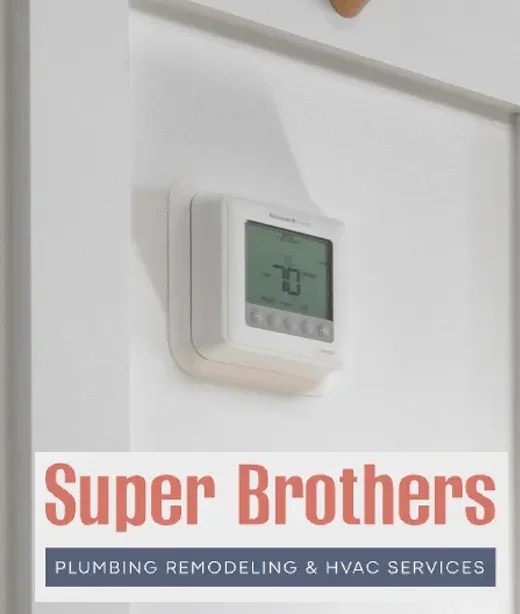
Before you touch anything mechanical, look at your thermostat like it owes you "money". Is it set to Heat or Cool (not just “Auto”)? Is the temperature set far enough from the room temperature that the system should actually run?
If it’s a battery-powered thermostat, weak batteries can cause weird behavior: blank screens, short cycling, or a system that “sometimes” runs. Swap the batteries if you’re not sure. That two-minute move fixes more problems than you’d expect.
If you have a smart thermostat, check the app for schedules, eco settings, and “away” modes. Plenty of homeowners have accidentally trained their thermostat to treat them like a ghost. If the thermostat thinks nobody’s home, it may intentionally hold back heating or cooling.
For energy-saving baseline settings, the U.S. Department of Energy commonly recommends around 68°F when you’re home in winter and about 78°F when you’re home in summer, then adjusting when you’re asleep or away. Comfort matters, but those numbers are a solid starting point if your bills are getting spicy. [1]
Step 2: Confirm power (“nothing happens” is usually electrical related)
If your system won’t turn on at all, don’t assume the unit “died.” Confirm it has power. Check the thermostat screen first. If the thermostat is dark and it’s not a battery issue, you may have lost power to the HVAC equipment.
Next, check your breaker panel. Many homes have separate breakers for the furnace/air handler and the outdoor AC/heat pump unit. A tripped breaker can look like a dead system. If a breaker is tripped, reset it once. If it trips again, stop there and call a licensed HVAC contractor. A repeat trip can signal a short, failing motor, or a failing capacitor—things you don’t want to “keep testing” like it’s a game.
Also check the power switch near your indoor unit (it often looks like a normal light switch). It gets turned off accidentally during cleaning, storage, or “I swear I didn’t touch anything” moments.
Step 3: Airflow check (the filter is the usual suspect)
If your HVAC turns on but your home still feels like a toaster oven (or a walk-in fridge), airflow is a prime suspect. Low airflow can make an air conditioner stop cooling, make a furnace overheat and shut off, or make a heat pump struggle nonstop.
Start with the air filter. If it’s loaded with dust, pet hair, or that mysterious gray fuzz that forms in every home ever, replace it. ENERGY STAR suggests inspecting, cleaning, or changing filters about once a month during heavy use. [2]
A clogged filter can cause icing on the AC coil, poor comfort, and higher energy costs. It can also stress the blower motor. Translation: a cheap filter can protect an expensive system, which is a pretty good trade.
Then do a quick vent and return check. Make sure supply vents aren’t blocked by rugs, furniture, or a beanbag chair you’ve been meaning to move since 2019. Make sure return grilles aren’t covered, either. Your system can’t breathe if its “nostrils” are taped shut.
Step 4: Outdoor unit check
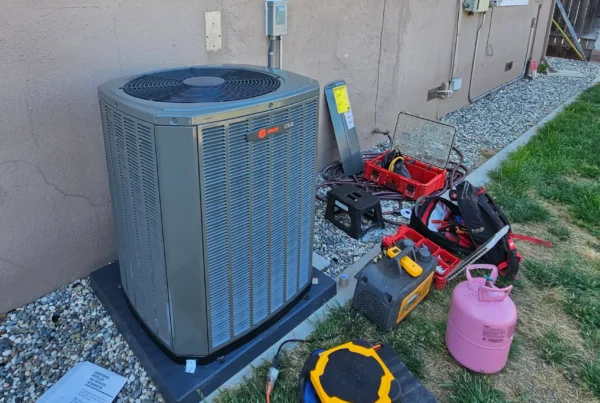
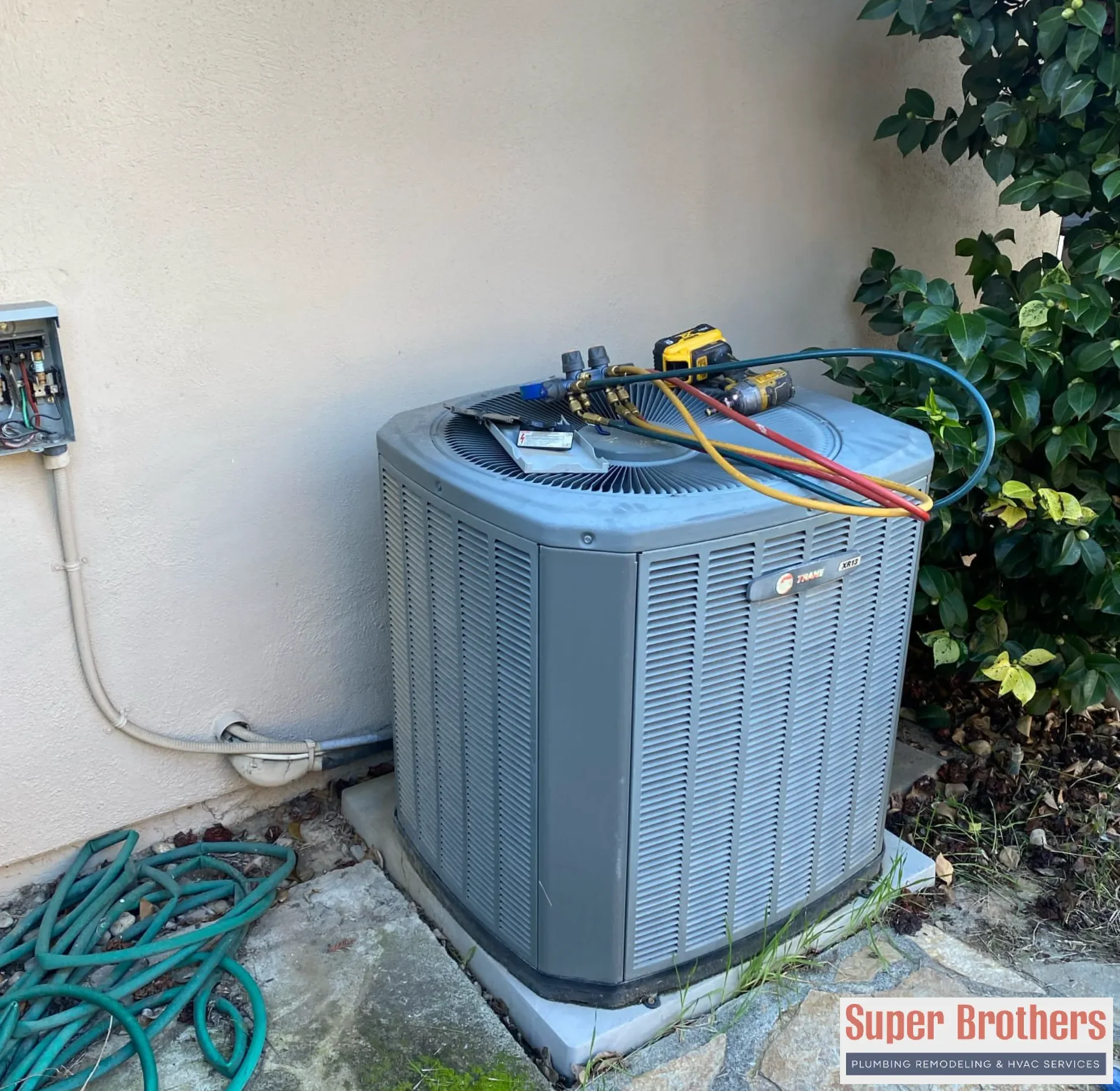
If you have central AC or a heat pump, your outdoor unit needs room to move air. Leaves, weeds, or stored items crowding the unit can reduce performance and increase wear. It’s not just about tidiness—it’s about airflow and heat transfer.
The U.S. Department of Energy recommends keeping the area around the outdoor condenser clean, removing debris, and trimming foliage back to maintain airflow (commonly around a couple feet of clearance). [3]
Turn the system off before you do any cleaning around the unit. You can gently remove leaves and debris around the outside. Don’t go poking inside with tools, and don’t pressure-wash the coil fins. Bent fins and damaged coils are the kind of “oops” that get expensive fast.
Know when to stop and call for help
There’s a difference between safe homeowner troubleshooting and risky DIY. HVAC systems involve high voltage, moving parts, combustion (for many furnaces), and refrigerant circuits. The goal is to do the safe checks, gather clues, and bring those clues to a licensed HVAC contractor who can diagnose and repair correctly.
- Call right away if you smell gas, hear hissing that seems like a gas leak, feel dizzy or nauseated indoors, or suspect carbon monoxide exposure. Leave the home and contact the appropriate emergency services and your utility provider.
- Call a licensed HVAC contractor if the breaker trips repeatedly, you see ice building up, you notice burning smells, or the system makes loud grinding/banging noises that weren’t there before.
Carbon monoxide safety matters any time you have fuel-burning appliances. The U.S. Consumer Product Safety Commission (CPSC) emphasizes CO hazards and the importance of proper use and maintenance of fuel-burning appliances, along with working CO alarms. [4]
If your AC is running but not cooling
This is one of the most common complaints in Sacramento summers and during Bay Area heat waves. Your system may be “on,” but that doesn’t mean it’s doing the job. Start by checking whether the air coming out of vents feels noticeably cooler than room temperature after it runs for a bit.
If the air feels weak or barely cool, change the filter and confirm vents are open. Then check the outdoor unit: is the fan spinning? If the outdoor fan isn’t running while the system is calling for cooling, stop and call a pro. That could be a capacitor, motor, or electrical problem.
If you see ice on the refrigerant line (the bigger copper line near the outdoor unit) or ice buildup on the indoor coil area, turn the system off and run the fan setting to help thaw it. Ice is usually caused by low airflow (dirty filter, blocked return, blower issue) or low refrigerant from a leak. Refrigerant is not a DIY situation—licensed techs have the tools and legal requirements to handle it safely.
Also check the condensate drain line. In many systems, a clogged drain triggers a safety switch that shuts off cooling to prevent water damage. If you’re comfortable and can access the drain safely, you might clear a visible clog at the drain outlet. If you’re not sure, leave it to a contractor—water damage is not a fun surprise.
If your furnace won’t heat (or heats and then quits)
Furnace issues often show up as “it tries, then gives up.” You may hear it start, then shut down. This can be caused by airflow problems (again: filter), a dirty flame sensor, ignition issues, or safety shutdowns. Many modern furnaces protect you by turning off when something looks unsafe.
First, confirm the thermostat is set to Heat and the setpoint is above room temperature. Then check the filter and make sure return grilles aren’t blocked. A furnace that overheats from poor airflow can trip a high-limit switch and shut down, then try again later.
Also confirm gas appliances in the home are working normally. If multiple gas appliances seem off, that’s a broader gas supply issue and should be handled carefully and promptly.
Don’t attempt to modify gas lines, bypass safety switches, or disassemble burners. If your furnace is short cycling, producing unusual smells, or you suspect combustion issues, a licensed HVAC contractor should inspect it. This is one of those times where the “I watched a video” approach can go sideways.
If you have a heat pump and it’s acting weird
Heat pumps are great in Northern California because they both heat and cool, but they confuse people because their “normal” sounds different from older furnace-only systems. In heating mode, the air coming from vents may feel lukewarm—not scorching—because heat pumps deliver steady, lower-temperature heat.
During cold mornings, you might also notice a defrost cycle. The outdoor unit can temporarily switch modes to melt frost. Steam can appear, and the unit may sound different for a few minutes. That can be normal.
What’s not normal: constant defrosting, long run times with no comfort improvement, or icy buildup that doesn’t clear. Those can point to airflow restrictions, sensor issues, or refrigerant problems. Again, those are contractor-level diagnostics.
Two quick “DIY-safe” checklists to save time (and maybe a service call)
Here’s a simple path that keeps you on the safe side while still being useful. If you do these and the issue remains, you’ll have better details to share with your HVAC technician, which usually means faster diagnosis.
- System won’t turn on: thermostat mode + setpoint, thermostat power/batteries, breaker(s), nearby HVAC switch, then call a contractor if it still won’t run.
- Runs but comfort is bad: replace filter, open vents, unblock returns, clear debris around outdoor unit, check for ice, then call a contractor if performance doesn’t improve.
Once you’ve done the basics, don’t keep “resetting and hoping.” HVAC systems are expensive, and repeated resets can stress electrical components. At that point, you’re paying for repairs with interest.
Maintenance that prevents the same problem from coming back next month
Most homeowners don’t mind paying for a repair. What they hate is paying for the same repair again because the root cause wasn’t addressed. The simplest long-term plan is regular maintenance: clean airflow, clean coils, correct refrigerant charge, and a system that’s properly tuned.
ENERGY STAR’s maintenance guidance calls out monthly filter checks during peak seasons, along with professional inspections to keep equipment running efficiently. [2]
The Department of Energy also highlights basic AC maintenance like keeping the outdoor area clear so the system can reject heat properly. [3]
If you’re in Sacramento, dust and wildfire smoke seasons can load filters faster. If you’re in parts of the Bay Area closer to the coast, salty air can be rough on outdoor components. Different neighborhoods, different stressors—either way, preventive care beats emergency calls during the first heat wave.
Indoor air quality: comfort isn’t just temperature
Heating and air conditioning aren’t only about warm or cool air. They’re also about how the air feels and what’s floating around in it. A system with poor filtration or ventilation can leave a home feeling stuffy, dusty, or irritating—especially for anyone with allergies.
The EPA notes that HVAC filters and portable air cleaners can reduce indoor air pollution, but they can’t remove every pollutant. That’s why filtration, source control (like reducing dust and moisture), and ventilation all matter together. [5]
If your home gets dusty quickly, or family members notice irritation, ask your contractor about filter options, duct leakage, and ventilation improvements. The goal isn’t to turn your house into a laboratory. It’s to make it feel better to live in.
Ventilation can also help with indoor pollutants, but it needs to be used thoughtfully when outdoor air quality is poor (like during wildfire smoke events). The EPA emphasizes ventilation as a strategy to dilute indoor airborne pollutants, while also noting the need to consider outdoor pollutant sources. [6]
“Should I repair it or replace it?” (the question every system eventually asks)
If your heating and air conditioning system is older, you may wonder whether you should keep repairing it or start planning a replacement. A good contractor won’t push you into a new system if a repair makes sense. They’ll show you what failed, why it failed, and what the options are.
Here’s a practical way to think about it: if the system is frequently breaking down, struggling to keep up, or using noticeably more energy than it used to, it may be time to look at the big picture. A one-time repair is normal. Repeated breakdowns are a pattern.
Also, sizing matters. An oversized system can short cycle and feel uneven. An undersized system can run nonstop and still not keep up. If your home has been remodeled, had windows changed, or added insulation, your HVAC needs may have changed too.
If you want the straight answer, schedule a diagnostic with a licensed HVAC contractor and ask for measurements: temperature split, static pressure, and an assessment of airflow. Numbers beat guesses every time.
What to tell your HVAC technician so the visit is faster and cheaper
When you call Super Brothers (or any licensed HVAC contractor), giving a few specific details can shave time off diagnosis. More clarity up front often means less time spent hunting for symptoms.
Helpful details include: whether the system turns on, whether the outdoor unit runs, whether airflow is weak or normal, whether there’s ice, and whether the thermostat screen is working. If your system shows an error code on a thermostat or control board, share it.
Also mention timing: did it start after a power outage, after changing the thermostat, or during the first very hot/cold day of the year? Patterns matter. HVAC is part science, part detective work, and you can hand your tech better clues.
Super Brothers approach: fix the problem, not just the symptom
If your heating and air conditioning is acting up in Sacramento or the Bay Area, the goal is simple: get your home comfortable again, and keep it that way. At Super Brothers, the best service calls are the ones where we solve the cause, explain what we found, and help you prevent the same issue from repeating.
If you’re ready to schedule a diagnostic or a tune-up, start here: Contact Super Brothers. If you want to learn about our HVAC services first, you can visit: Heating & Air Conditioning Services.
And if you’re reading this because your system picked the hottest day of the year to quit, you’re not alone. HVAC systems have dramatic timing. They’re basically the group chat friend who only texts when there’s chaos.
FAQ
Why is my AC running but not cooling the house?
The most common causes are low airflow (dirty filter, blocked return, closed vents), a dirty outdoor unit, or icing due to airflow problems or refrigerant issues. Start with filter and airflow checks, then call a licensed HVAC contractor if it persists.
How often should I change my HVAC air filter?
It depends on your home, pets, and air quality, but checking monthly during heavy heating or cooling seasons is a solid routine. Many households replace filters every 1–3 months, and more often during dusty or smoky periods. [2]
What temperature should I set my thermostat to?
A common energy-saving baseline is around 68°F in winter when you’re home and about 78°F in summer when you’re home, then adjusting when you’re away or asleep. Comfort and health needs matter, so treat these as starting points, not strict rules. [1]
Is it normal for a heat pump to blow lukewarm air in heating mode?
Often, yes. Heat pumps deliver steady heat that can feel cooler than furnace heat, even while warming the home. If the house never reaches set temperature or the system runs nonstop, it’s time for a professional check.
What should I do if I see ice on my AC lines or unit?
Turn off cooling to prevent damage and run the fan to help thaw. Ice usually points to low airflow or refrigerant problems. After it thaws, replace the filter and check vents—then schedule a licensed HVAC diagnosis if it happens again.
Do HVAC filters help with indoor air quality?
They can. The EPA notes HVAC filters and portable air cleaners can reduce indoor air pollution, but they don’t remove every pollutant. The best results come from combining filtration with good ventilation and controlling pollutant sources (like dust and moisture). [5]
Super Brothers Quality
Choose Super Brothers Plumbing Heating & Air because we use top-tier materials, deliver honest workmanship, and back every job with a real warranty. Our pricing is fair and transparent—no hidden fees, ever.
We pull the permits, build to California code, and pass inspection. Our licensed, highly experienced team handles full plumbing and heating/air replacements and installations, so the job’s done right the first time.
- Top-tier materials
- Honest, quality service
- Workmanship warranty
- Fair, transparent pricing (no hidden fees)
- Permits handled; California code compliant; passes inspection
- Licensed & experienced in plumbing and HVAC installs




Refer Friends, Reap Rewards
Share our expert plumbing services with friends and family. For every successful referral, you earn cash rewards. Refer Now

Ready To Experience Super Brothers Difference! Let’s Start a Conversation!
Financing Options
Super Brothers offers an Installment Payment Plan with 0% Interest for Projects over $1000

Fin tech company that provides payment solutions in the home improvement sector.
Flexible financing for your next home improvement project
Wells Fargo Home Projects Credit Card