You are enjoying a normal Sacramento day, then your yard decides to audition for “Sacramento River: Backyard Edition.” The water bill spikes, the pressure drops, or there is a mysterious wet patch that never dries. That is when the big question hits: who is actually on the hook to fix it?
The honest answer is: it depends on where the break is and who owns that section of pipe. In the Sacramento area, “who pays” is usually decided by a simple boundary: the water provider’s side versus the property owner’s side. Once you know where the handoff point is, the rest gets a lot less stressful.
This guide is written for Sacramento homeowners, landlords, and renters who want a straight answer without getting lost in technical talk. We will walk through the typical setup in our region, the most common real life scenarios, and how to avoid paying for something that is not yours. And yes, we will talk about insurance, because that is often where people either save money or get surprised.
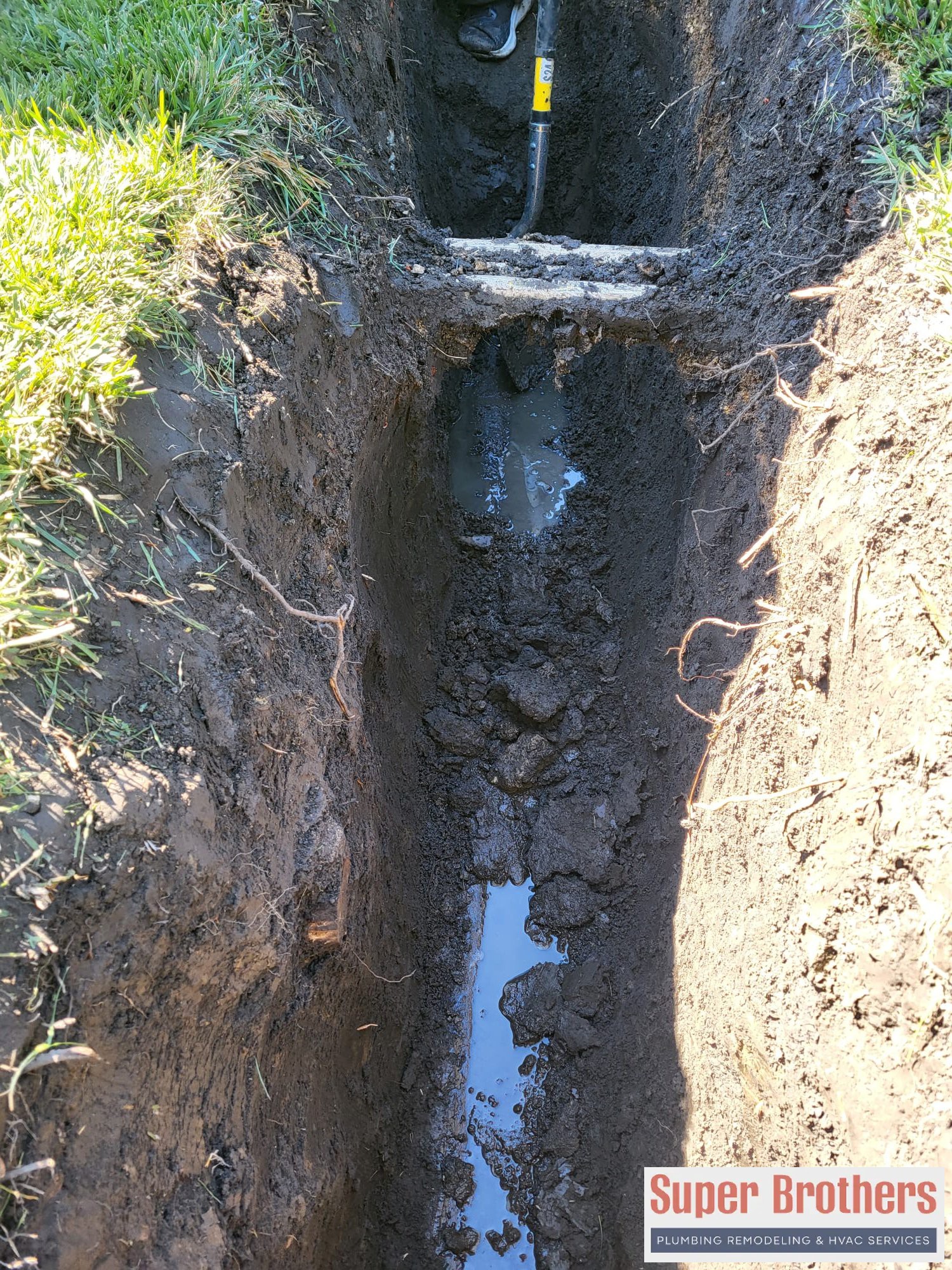
First, which “water line” are we talking about?
Most people say “water line” and mean the pipe that brings fresh water from the street to the house. In plumbing terms, that is often called the water service line. It is usually underground and it is the one that can turn a quiet leak into a full blown yard fountain.
There are also pipes inside the home, like the line feeding your water heater, sinks, and showers. Those are still “water lines,” but they are not what most people mean when they say “main water line repair.” The ownership rules are different, and the repair approach is different too.
Here is the easiest way to picture it. Water comes from the neighborhood water main, goes through a shutoff and the meter area, then continues underground to your house. After it enters the home, it becomes your interior plumbing system.
If the leak is indoors, it is almost always on you as the property owner (or your landlord if you rent). If the leak is underground, the only way to answer “who pays” is to find out whether the problem is before or after the meter handoff point.
The simple rule that solves most arguments
In most Sacramento area service territories, the water provider maintains the main in the street and the equipment up to the meter area. The property owner typically maintains the piping after the meter, meaning the side that goes toward the house. That is why the meter box is such a big deal in these conversations.
Some areas also have a curb stop shutoff valve involved, especially for older or specific service setups. The key is that there is a defined connection point where the provider’s responsibility ends and the owner’s responsibility begins. Your water provider can tell you exactly what that point is for your address.
- Usually the water provider pays when the leak is on the street side of the meter or within the meter equipment they own.
- Usually the property owner pays when the leak is on the house side of the meter, meaning the line running from the meter to the home.
If you only remember one thing, remember this: do not guess. A quick call to your water provider can save you from paying a plumber to dig up a section the utility would have repaired anyway.
How it commonly works around Sacramento
Sacramento is not served by just one water provider. Depending on your neighborhood, your bill might come from the City of Sacramento Department of Utilities, Sacramento Suburban Water District, or another local district. The rules look similar across most providers, but the exact boundary language can differ.
For example, Sacramento Suburban Water District explains that for metered service, the owner’s responsibility begins at the outlet side of the meter setter. In plain terms, once the water leaves the meter assembly and heads toward your house, that piping is typically your problem to repair.
The City of Sacramento also defines what a “water service connection” includes, such as the valve at the main and the meter and curb stop components for metered service. The practical takeaway is that there is a recognized handoff and that private water lines can remain private even when they run through certain areas.
So, if you are in Arden Arcade, Carmichael, Fair Oaks, or other parts of the county served by a district, start by checking your bill to see which agency you pay. If you are in the City of Sacramento service area, the City’s water utilities resources are usually your first stop. If you are not sure, Super Brothers can help you identify the provider quickly, but the bill is often the fastest clue.
Where the break is changes everything
Two leaks can look identical on the surface and still have totally different payers. A soggy lawn near the sidewalk might be a provider side issue, or it might be your side line leaking and just “traveling” underground. Water is sneaky like that.
This is why locating the leak matters. If you call a plumber first, you might pay for a diagnostic visit that the water provider would have done for free. If you call the provider first and it is on your side, you have not lost anything, and you have gained a clear starting point.
Many providers will also tell you how they define the responsibility point and what they can inspect. Some even recommend contacting them before you hire a plumber if you are unsure where the leak sits. That is good advice in Sacramento because service setups vary from older Midtown lots to newer developments in Elk Grove or Natomas.
Common scenarios and who usually pays
1) Leak or break in the street main
If the water main under the street breaks, that is almost always the water provider’s responsibility. You might see low pressure for the whole block, water bubbling up through asphalt, or neighbors posting about it before you finish your coffee. In those cases, call the water provider’s emergency line.
The catch is that a street main break can still cause issues on private property. Pressure changes can shake loose weak points in older pipes. If the street main is repaired but you still have low pressure, you might also have a private side issue that showed up at the same time.
2) Leak at the meter box
The meter box is the most common “gray area” people argue about. In many cases, the meter itself and certain fittings are owned and maintained by the water provider. If water is leaking from the meter assembly, the provider often handles it.
But if the leak is on the outlet side leaving the meter and heading toward the house, that is commonly the property owner’s responsibility. That is why the exact leak location inside the box matters. A photo and a quick call to your provider can prevent a lot of wasted time.
3) Leak between the meter and the house
This is the classic homeowner surprise. The line is buried, the leak might be quiet for months, then suddenly the soil gives way or the bill jumps. In most Sacramento area setups, that pipe run from the meter to the house is owned by the property owner.
If you own the home, you pay unless insurance or a special coverage add on steps in. If you rent, it is usually the landlord’s responsibility because it is part of the property’s core plumbing system, unless a tenant caused damage through misuse or neglect. More on rentals in a moment.
4) Leak under a driveway, walkway, or slab edge
The location does not automatically change ownership, but it definitely changes the cost and complexity. A break under concrete usually needs careful excavation, patching, and sometimes concrete replacement. That is why a “simple” leak can get expensive fast when it is under hardscape.
This is also where repair strategy matters. Sometimes the smartest move is not to patch one spot but to replace the whole run with a new line, especially if the pipe material is old and brittle. In older Sacramento neighborhoods, you might be dealing with aging galvanized or early plastic lines that are living on borrowed time.
5) Private lines in easements or unusual layouts
Some properties are served through private easements, private streets, or shared driveway corridors. In these cases, the line might be considered a private water line even though it is not sitting neatly within a standard front yard run. The City of Sacramento’s code language recognizes situations where water service lines in private easements are treated as private lines and not maintained by the City.
If your home is on a flag lot, behind another home, or part of a small cluster with shared access, do not assume the utility covers it. These are exactly the cases where you want the provider to confirm the responsibility point in writing, then bring in a licensed plumber who is comfortable working with easements and shared access issues.
6) Damage caused by construction or digging
If someone hit the line while digging, the person or company who caused the damage may be responsible. That could be a contractor, a landscaper, or even a homeowner doing a weekend project. Sacramento soil can be forgiving in some spots, but it still hides utilities that do not forgive back.
If this happens, document everything. Take photos, note the time, and keep any invoices or work orders. If a contractor was involved, you may be dealing with their insurance or your own coverage while liability gets sorted out.
How to tell if the leak is likely on your side
You do not need to be a plumber to catch a lot of clues. You just need a few minutes of observation and a willingness to look at the meter. If you can do a basic home inspection for a new couch delivery, you can do this too.
Start by turning off all water inside the home, including sprinklers, ice makers, and any sneaky running toilets. Then go to the water meter and look for movement. Many meters have a small leak indicator that spins even with tiny flow.
If the meter shows flow when everything is off, there is a good chance the leak is on the house side. If the meter is not moving but you still see wet ground near the curb, the issue might be on the provider side or it might be intermittent. Either way, this is when you call your water provider and explain what you observed.
Also pay attention to where the wet area appears. If the wet spot is closer to the house than the street, it is often the private line. If it is right near the meter box or curb, it can go either way, and the provider’s definition of the boundary becomes the deciding factor.
Renters in Sacramento: who pays, tenant or landlord?
If you rent a home in Sacramento and the main water line feeding the house fails, that is usually a landlord problem. The reason is simple: working plumbing and water supply are part of habitability in California. A rental needs to have basic utilities working, including plumbing and water.
California tenant resources from the state explain that landlords must keep a unit habitable and that includes working plumbing and water. Tenants generally need to notify the landlord and give a reasonable chance to repair, especially if it is not an immediate emergency.
If you are a tenant dealing with a suspected underground leak, do not authorize major repairs yourself unless you have clear written approval. Put the request in writing, include photos, and keep copies. If water is actively flooding or there is a safety risk, call emergency services or the water provider as needed, then notify the landlord immediately.
Tenants can still be responsible when damage is caused by misuse, like someone repeatedly ignoring a known running toilet or doing unauthorized work that breaks something. But a buried service line failing from age, roots, or ground movement is typically not a tenant created problem.
HOAs, duplexes, and shared lines
If you live in a condo, townhome, or a property with an HOA, the “who pays” question can shift. Some HOAs cover certain exterior plumbing runs, while others stop at a wall boundary and leave the rest to the owner. Duplexes and shared lot setups can also have shared service lines or shared trench paths.
The only reliable answer is in the governing documents and the way the water is metered. If each unit has its own meter, the line from that meter to that unit is usually tied to that unit’s responsibility. If there is one shared meter for multiple units, responsibility can be shared or assigned by agreement.
If you are unsure, do not let it turn into a group chat argument with twenty opinions and zero facts. Pull the HOA documents, confirm how the water service is set up, then get a professional evaluation. A shared line leak is the kind of issue that gets more expensive the longer everyone debates it.
Does homeowners insurance pay for water line repair?
This is where many Sacramento homeowners get tripped up. A standard homeowners policy often covers sudden water damage inside the home, like a burst pipe that damages flooring. But the buried service line outside the home is frequently not covered unless you have an extra endorsement or add on.
Many insurers offer something called service line coverage. It is designed to help pay for repair or replacement of underground utility lines, including water lines, that run from the street toward your home. Policies vary, and the deductible matters, but it can be a real budget saver if your line fails under concrete or landscaping.
Service line coverage can also help with the “hidden costs” people forget, like excavation and restoring the yard. Some versions even address wear, corrosion, root intrusion, or freezing, depending on the policy terms. Sacramento does not freeze like the Midwest, but corrosion, age, roots, and soil movement are plenty common here.
If you are dealing with a water line break right now, ask your insurance company one direct question: “Do I have service line coverage for the water line from the meter to the house?” If the answer is no, ask what documentation they need to confirm. If the answer is yes, ask about limits, deductibles, and whether excavation and restoration are included.
What about home warranties?
Home warranties are a mixed bag for buried lines. Some plans cover certain plumbing repairs, but many exclude underground service lines or limit coverage heavily. If you have a warranty, call and ask specifically about “the underground main water service line from the meter to the house.”
If they say it is covered, ask for the coverage cap and what excavation is allowed. If they say it is not covered, do not waste time arguing. Use the warranty for what it does cover, then move forward with a real plan for the service line.
In Sacramento, buried line problems are often about access and labor, not just the pipe itself. Warranty plans that cap labor or exclude excavation can still leave you paying most of the bill.
How much does water line repair cost in Sacramento?
Prices vary widely because every property is different. A shallow leak in soft soil is nothing like a break under a driveway with a long run from the street to the house. The length of the line, the depth, the pipe material, and the obstacles on top of it are what drive cost.
National cost guides commonly put basic main water line repairs in the hundreds to low thousands, while full replacements can rise significantly depending on feet, trenching, and restoration. Trenching tends to cost less per foot for the pipe work itself, but you might pay more after the fact to restore landscaping, concrete, and hardscape.
Trenchless methods can reduce surface damage in the right situation. They are not magic, but they can be a great fit when you want to protect a finished yard or avoid tearing up a long driveway. A good plumber will tell you whether trenchless is realistic for your line, your soil conditions, and your access points.
The best way to avoid sticker shock is to ask for a written scope, not just a number. You want to see what is included: excavation, permits if needed, pipe material, valves, testing, backfill, and any surface restoration. If a quote is vague, that is how surprise charges happen.
What you should do first (before you spend money)
When water is involved, people rush, and rushing is how you pay twice. If the water is actively flooding, shut it off and call for help. If it is a suspected leak and not an emergency spray, take ten minutes to confirm the basics.
Start with the meter test and a visual look around the meter box. Then call your water provider and explain what you found. If the provider confirms it is on your side, you can confidently call a plumber knowing you are not paying for the utility’s job.
- If water is gushing: shut off at the meter if you can do it safely, then call your water provider and a plumber.
- If it is a quiet leak: do the meter test first, then call your provider to confirm responsibility before excavation starts.
If you need a repair in Sacramento, Super Brothers Plumbing can handle the full process, from locating the leak to repairing or replacing the line. If it is a bigger project that touches related systems, we also have HVAC, electrical, and bathroom remodeling teams across Sacramento and the Bay Area, which helps when repairs overlap with other home upgrades.
For plumbing help, you can learn more here: plumbing services. If you suspect a main water line issue specifically, contact our team for an evaluation.
Why Sacramento homes see water line issues
Sacramento has a mix of older neighborhoods and newer builds, and the pipes reflect that. Older homes may still have aging metal pipes that corrode over time. Some mid century properties have materials that were popular back then but are less loved today.
Tree roots are also a big factor. Mature landscaping is one of the best parts of many Sacramento streets, but roots do what roots do. They chase moisture, they shift soil, and over time they can stress older pipes or exploit small weak points.
Ground movement matters too. Sacramento is not constantly shaking, but soil expands and contracts with moisture changes, and that can stress joints over years. Add in traffic vibration near busy streets, and a tired pipe can finally give up.
Sometimes the issue is not the pipe failing, but the fittings and valves aging. A small leak at a connection can waste a shocking amount of water quietly. That is why watching your bill and checking your meter once in a while is a surprisingly good adulting habit.
Repair vs replacement: how to choose
People love the idea of a quick patch. Sometimes that is the right call, especially when the pipe is newer and the damage is clearly isolated. If a single spot failed because of a one time event, repairing that section can be smart.
But if the pipe is old and the material is known to corrode or crack, patching can turn into a game of whack a mole. You fix one spot, then another weak point fails a few months later. That is when replacement becomes cheaper in the long run, even if it costs more today.
A good contractor will explain what they found, show you the condition of the pipe if it is exposed, and give you options. If the recommendation is “replace everything” without evidence, push back. If the evidence shows widespread corrosion, splits, or poor material, a full replacement can be the most practical choice.
Replacement also gives you a chance to upgrade the shutoff strategy. Many Sacramento homeowners do not realize their main shutoff is difficult to access or barely functional until an emergency happens. A repair project can be the perfect time to fix that, so future you will thank present you.
Trenching vs trenchless in plain terms
Trenching is exactly what it sounds like: dig a path to reach the pipe, repair or replace it, then backfill. It is straightforward and often the default option. The downside is the mess, especially if the line runs under landscaping, walkways, or driveways.
Trenchless methods aim to reduce surface disruption. Depending on the situation, a plumber may be able to replace the pipe by pulling a new line through, bursting the old one, or using other methods that do not require opening a full trench across the yard. Not every line qualifies, and access points still matter.
The right choice depends on your property. If the line is short and easy to access, trenching can be totally reasonable. If the run is long and crosses expensive hardscape, trenchless can save you from a patchwork driveway situation that never looks quite the same again.
In Sacramento, trenchless is often appealing for homes with finished front yards, tight side yards, and older mature landscaping. It can also help when the line runs close to other utilities where careful work matters.
Permits and coordination: what homeowners should expect
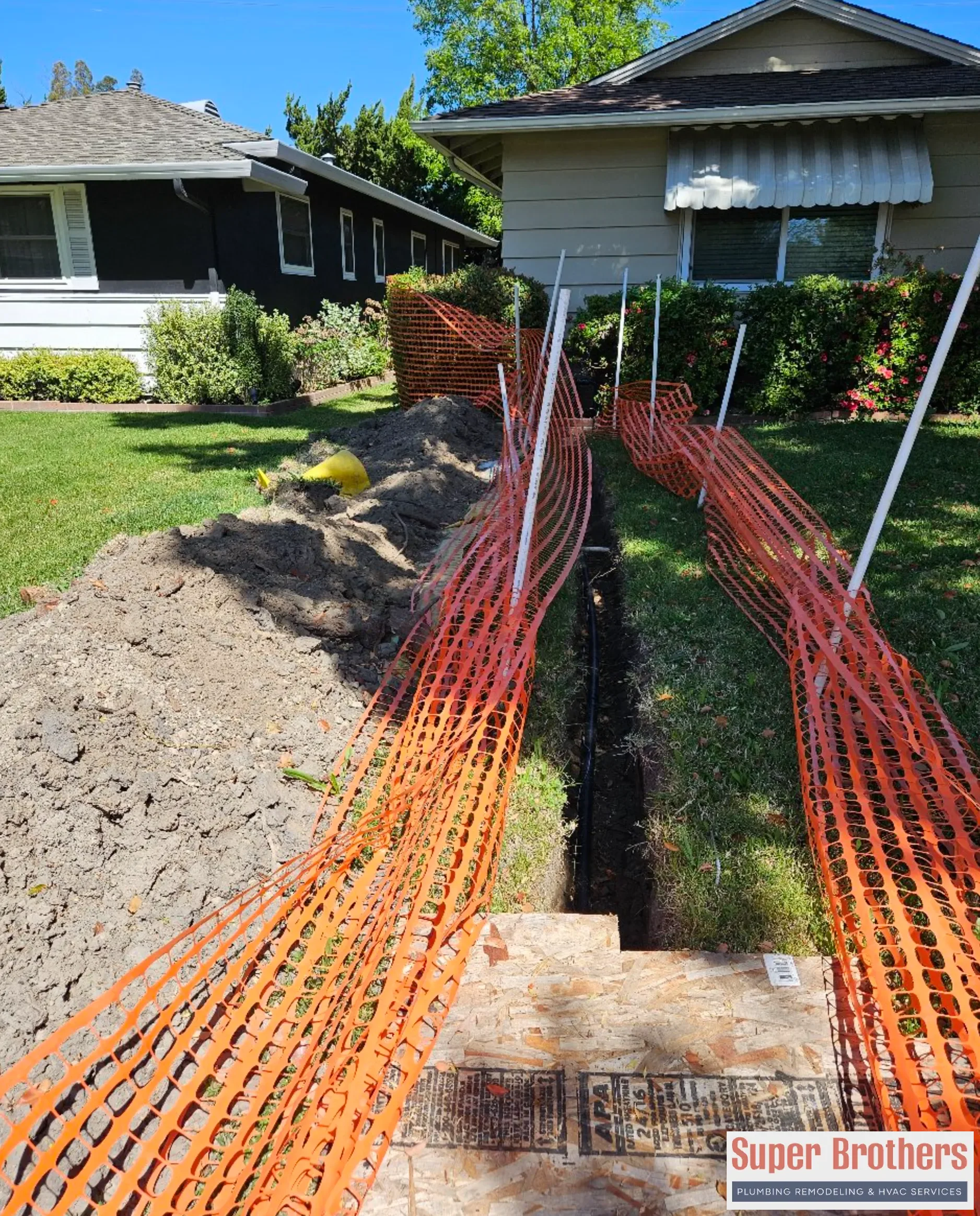
Not every repair needs a permit, but many replacements do, especially if work touches the connection point near the public side or requires excavation in a sensitive area. Rules can also vary depending on the water provider and whether the work affects the meter area or public right of way.
Your plumber should tell you what permits are needed and who is pulling them. If someone suggests skipping permits for a job that clearly changes the service line, that is a red flag. A proper repair should be safe, tested, and documented.
Also expect utility marking. Before digging, lines should be marked to avoid hitting gas, electric, or telecom. That is not busywork, it is how you avoid turning one repair into three emergencies.
If you are in a neighborhood with narrow frontage, street parking, or high foot traffic, planning matters. Good contractors protect the site, coordinate access, and keep the area as clean as possible. It is not glamorous, but it is the difference between a controlled repair and a chaos festival.
Ways to lower the odds of a future water line failure
You cannot control everything underground, but you can reduce risk. The easiest win is paying attention to early warning signs. A slowly rising bill, unexplained wet spots, or pressure that feels weaker than usual can all be early clues.
Another smart move is knowing where your shutoff is and making sure it actually works. If the main shutoff is stuck, do not wait until you have a leak. Fixing or upgrading a shutoff during a calm week is way better than doing it while water is trying to redecorate your floors.
If you have mature trees near the service line route, ask a plumber to help you understand where the line runs. Sometimes a small reroute during replacement can avoid the worst root zones. You do not have to remove beloved trees to have a reliable water line, but planning helps.
Finally, consider insurance options before you need them. If service line coverage is affordable for your situation, it can make a future underground repair much less painful. It is not for everyone, but it is worth asking about, especially if your home is older or has long runs under hardscape.
Local help programs and bill surprises
Some homeowners qualify for local assistance programs for certain leak repairs and water saving upgrades. The City of Sacramento has offered programs aimed at helping eligible homeowners address leaks and improve efficiency. If you think you might qualify, it is worth checking, especially if a leak is driving up your bill.
Also, if you had a major leak, ask your provider about bill adjustment options. Some agencies will consider adjustments when you provide proof of repair, even though policies vary. The key is to call sooner rather than later and keep your paperwork.
If you are not sure what your provider offers, Super Brothers can help you gather the repair documentation and walk you through what to ask. You should not have to become a paperwork detective just because a buried pipe failed.
FAQ: Who pays for water line repair in Sacramento?
Is the city responsible for the water line from the meter to my house?
In many Sacramento area setups, the property owner is responsible for the line on the house side of the meter. Your specific provider defines the exact handoff point, so confirm with the agency listed on your water bill.
If water is leaking in the meter box, who pays?
If the leak is within the meter itself or on the provider side fittings, the provider often handles it. If the leak is on the outlet side heading toward the house, it is commonly the property owner’s responsibility. A provider inspection can usually confirm this quickly.
I am a tenant. Can my landlord make me pay for an underground water line repair?
Generally, no, if it is normal wear, aging infrastructure, or a buried line failing on its own. In California, working plumbing and water are part of habitability, which is typically the landlord’s responsibility unless the tenant caused the damage.
Does homeowners insurance cover a broken water service line?
Often not under a basic policy. Many insurers offer optional service line coverage that may help pay for underground water line repairs and excavation, depending on the policy terms and limits.
What are the most common signs of a water service line leak?
A sudden jump in your water bill, low water pressure, a meter that runs when everything is off, or a wet area in the yard that does not dry out are common signs. If you see any of these, confirm with a meter check and call your provider.
Is trenchless water line replacement worth it in Sacramento?
It can be, especially when trenching would destroy a finished yard, driveway, or mature landscaping. Not every line qualifies, so the right first step is an evaluation of access points, pipe condition, and route.
Can tree roots break a water line?
Roots usually do not “crush” a healthy modern pipe, but they can stress older lines, exploit weak joints, and shift soil over time. In older Sacramento neighborhoods with mature trees, roots are a common factor in underground plumbing issues.
What should I do first if I suspect a main water line leak?
Turn off all water inside, check whether the meter still shows flow, then call your water provider to confirm responsibility. If it is on your side, schedule a licensed plumber to locate and repair the leak.
Sources and further reading
1) Sacramento Suburban Water District: Repair and Responsibility
2) Sacramento Suburban Water District: Operations Questions (responsibility by meter side)
3) City of Sacramento document: definitions and service connection language
4) City of Sacramento: Free Leak Repair program info
5) Progressive: Service line coverage overview
6) Nationwide: service line responsibility and coverage discussion
7) Liberty Mutual: Service line coverage overview
8) Angi: main water line replacement cost factors and ranges
9) HomeAdvisor: water main line replacement cost ranges
10) California DOJ: tenant habitability and working plumbing overview
11) California Civil Code 1941.1 (Justia): habitability basics including plumbing and water
Super Brothers Quality
Choose Super Brothers Plumbing Heating & Air because we use top-tier materials, deliver honest workmanship, and back every job with a real warranty. Our pricing is fair and transparent—no hidden fees, ever.
We pull the permits, build to California code, and pass inspection. Our licensed, highly experienced team handles full plumbing and heating/air replacements and installations, so the job’s done right the first time.
- Top-tier materials
- Honest, quality service
- Workmanship warranty
- Fair, transparent pricing (no hidden fees)
- Permits handled; California code compliant; passes inspection
- Licensed & experienced in plumbing and HVAC installs





Refer Friends, Reap Rewards

Share our expert plumbing services with friends and family. For every successful referral, you earn cash rewards. Refer Now

Ready To Experience Super Brothers Difference! Let’s Start a Conversation!
Financing Options

Super Brothers offers an Installment Payment Plan with 0% Interest for Projects over $1000

Fin tech company that provides payment solutions in the home improvement sector.

Flexible financing for your next home improvement project

Wells Fargo Home Projects Credit Card