Hot water is one of those things you don’t fully appreciate until it’s gone. Then suddenly everyone in the house is taking “camping showers” and arguing about who used all the hot water (even though there wasn’t any to begin with).
If you’re a Sacramento homeowner trying to figure out what a fair price is to replace a water heater, you’re asking the right question. Prices can swing a lot, and the difference between “fair” and “ouch” usually comes down to the details: the type of heater, the setup you already have, and what upgrades are required to meet local rules and safety standards.
This guide breaks down realistic price ranges for the Sacramento area, what drives the cost up or down, and how to compare quotes without needing a contractor dictionary. If you want help choosing the right option, Super Brothers Plumbing (plus HVAC, electrical, and remodeling) serves Sacramento and the Bay Area—and we’re happy to walk you through it.
First, the straight answer: typical Sacramento price ranges
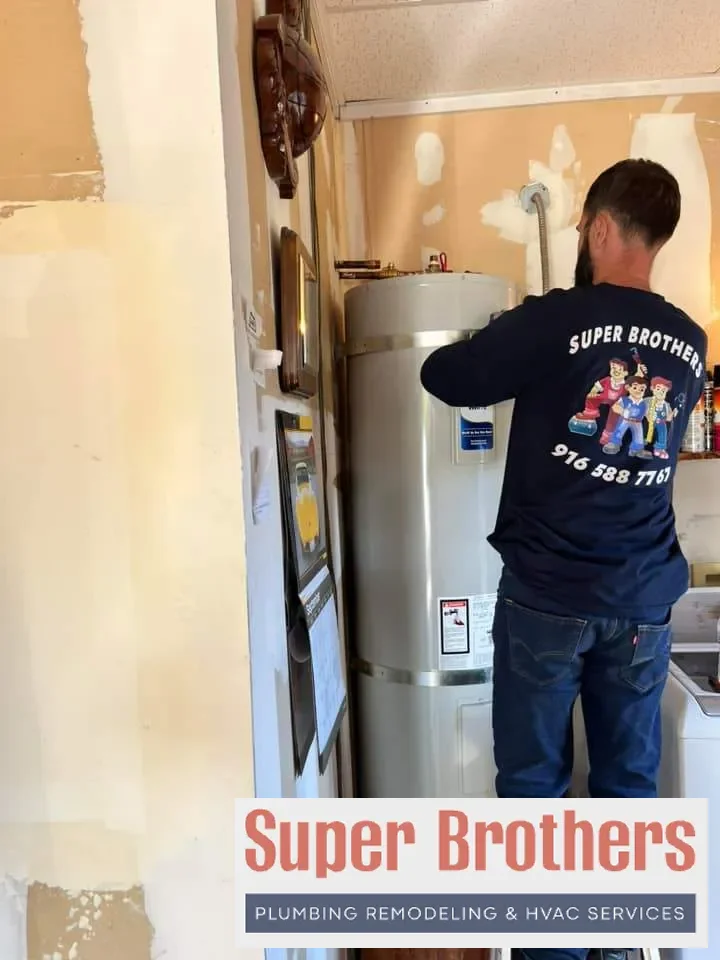
A “fair” price usually means the quote matches the real scope of work, includes the required safety/code items, and comes with proper permitting and warranty support. In Sacramento, you’ll commonly see installed totals land in these ranges depending on the type of system and the complexity of the swap.
Here’s a practical way to think about it: a basic like-for-like tank replacement is often the most budget-friendly. Once you move into tankless conversions, venting changes, electrical upgrades, or heat pump systems, you’re paying for more labor, more parts, and sometimes more coordination.
| Replacement Type | Fair Installed Range (Sacramento area) | Why the range is wide |
|---|---|---|
| Standard tank (gas or electric) like-for-like | $1,600–$3,500 | Pan/drain needs, code updates, access, vent/gas condition |
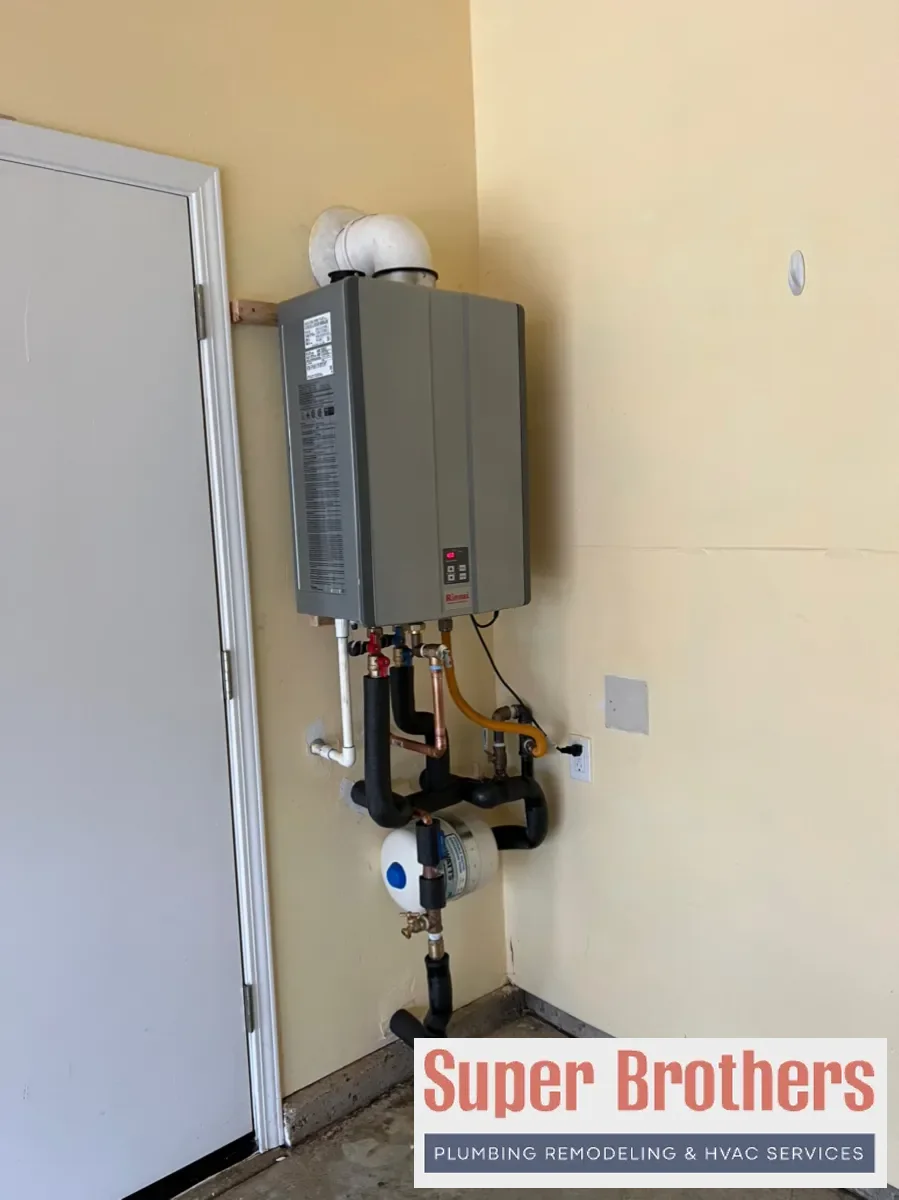
| Tankless (gas) replacing existing tankless | $3,800–$8,000 | Venting, isolation valves/flush kit, gas sizing, mounting location |
| Tankless (gas) converting from a tank | $5,500–$10,500+ | New venting, gas line upgrades, electrical, condensate, re-piping |
| Heat pump (hybrid electric) tank | $3,500–$9,000 | 240V circuit work, space/airflow needs, condensate routing |
Those ranges line up with national pricing data too. Nationally, many sources put typical tank-style replacement totals roughly in the $600–$2,500 range and tankless often higher, but Sacramento frequently lands above the low end because permitting, local code expectations, labor rates, and regional requirements (like low-NOx rules for many gas models) can add cost.
If you’ve received a quote that’s way below these ranges, it doesn’t automatically mean it’s a scam—but it should trigger questions. Often the “too good to be true” number is missing permit costs, code-required safety items, disposal, or it assumes everything is perfect until the installer shows up and starts “discovering” add-ons.
What you’re actually paying for (and why it’s not just the tank)
A water heater replacement isn’t just swapping a metal cylinder. A proper install is a mix of plumbing, safety, venting (for gas), electrical (for electric/heat pump), and compliance work. When done right, it’s the kind of project you don’t think about again for a long time—which is exactly the goal.
Most fair quotes include three buckets: the equipment itself, labor, and the “supporting cast” of parts and compliance steps. That last bucket is where prices can diverge fast between contractors.
1) The water heater (equipment) is the obvious piece. Price depends on brand, capacity, efficiency, warranty tier, and whether it’s tank, tankless, or heat pump.
2) Labor depends on access, how much has to be modified, and how many trades are involved. A straightforward garage swap is usually faster than a tight closet install, an attic unit, or anything that requires venting changes.
3) Parts and code updates can include items like seismic strapping, drip pans and drain piping, gas shutoff/sediment trap updates, expansion tanks (when required), vent connector improvements, earthquake strapping, and more. In California, seismic strapping is a big one—because, well, California likes to wiggle.
Sacramento-specific cost drivers people don’t expect
Sacramento isn’t just “anywhere USA” when it comes to water heaters. Local permitting rules, seismic requirements, and air-quality regulations can affect what can legally be installed and what has to be upgraded during replacement.
Permits and inspections are commonly required for water heater replacement in the City of Sacramento, and the fees can vary depending on the project. Permits protect you too: it’s third-party verification that the install meets safety rules, which matters for insurance claims and home sales.
Seismic strapping is a standard expectation in California plumbing/building practice. Water heaters are typically required to be anchored/strapped at the upper and lower third to resist earthquake movement. If a quote doesn’t mention strapping, that’s a red flag that someone is skipping basics.
Low-NOx rules can affect certain gas water heater installs in Sacramento County. The Sac Metro Air District has requirements aimed at reducing NOx emissions, and contractors generally have to select compliant equipment. Sometimes that narrows model choices compared to other regions.
Older housing stock in areas like East Sacramento, Land Park, Oak Park, Midtown, and parts of Arden-Arcade can mean older venting, undersized gas lines, or nonstandard plumbing. That doesn’t mean “run away,” it just means the install may require more updating than a newer Natomas or Elk Grove build.
Hard water is also common in the region. Hard water doesn’t always change the replacement price, but it can influence what you should install (and how you maintain it), especially for tankless systems that need periodic flushing.
Tank-style replacement: the most common (and usually the most predictable)
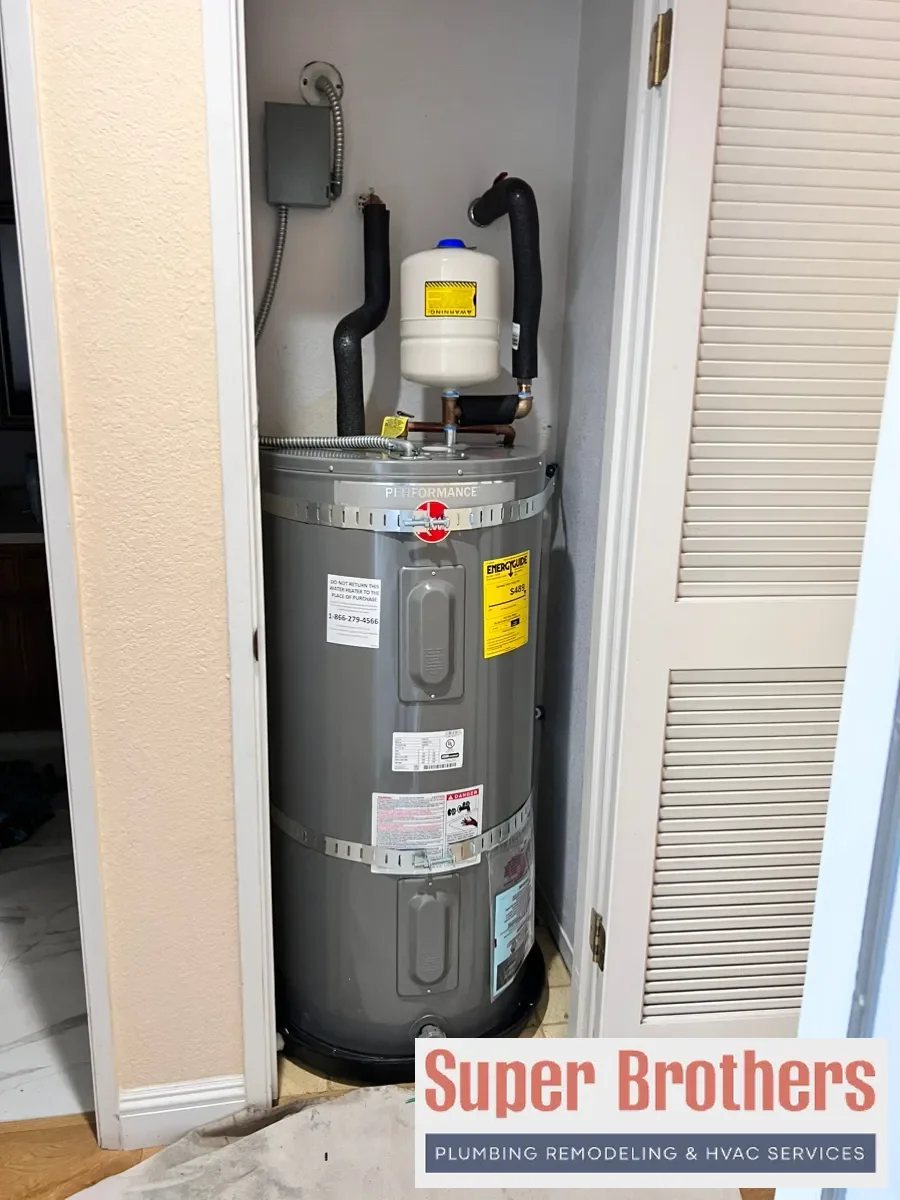
Most Sacramento homes still use standard tank water heaters. They’re simple, dependable, and relatively quick to replace when the swap is like-for-like. If your current heater is in a garage with decent access and your piping/venting is in good shape, costs are typically more predictable.
A fair quote for a tank replacement usually includes hauling away the old unit, setting the new heater, connecting water/gas/electric, verifying safe operation, and meeting basic code requirements. If you’re replacing gas-for-gas or electric-for-electric in the same location, you’re often in the more affordable range.
Where tank replacements get pricier is when the install needs updates: new shutoff valves, a corrected T&P (temperature/pressure relief) drain line routing, a drain pan and drain line, improved vent connector, or modifications to meet current safety expectations.
Capacity matters, but not always how people think. A bigger tank costs more, but the “right” size is about usage patterns. A household that showers back-to-back like it’s a relay race might need more capacity than a couple who showers at different times and runs the dishwasher at night.
If you’re trying to keep budget tight, a basic, compliant tank swap is often the best value. It’s not the fanciest upgrade, but it’s the one that gets you back to normal life fast—aka hot showers and fewer family negotiations.
Tankless: great comfort, higher install stakes
Tankless water heaters are popular for a reason: they can provide long runtimes, free up space, and often improve efficiency. But “fair price” matters more here because the install quality is everything.
If you already have a tankless and you’re replacing it with a similar unit, costs are usually more contained. The existing venting, gas line size, and mounting setup may already be compatible, and the job is more of a swap than a rebuild.
Converting from a tank to tankless is where quotes jump. A tankless system can require changes to the gas line sizing, new venting (or different vent materials), electrical power, and condensate drainage depending on the model. It’s not unusual for the “conversion” job to cost significantly more than a simple replacement.
In Sacramento, a fair tankless quote often includes isolation valves and a flush/service setup. If the quote skips those, it’s like buying a car without agreeing on oil changes—everything feels cheaper until it’s not.
Heat pump (hybrid electric): the “smart appliance” choice that can pencil out
Heat pump water heaters (often called hybrid) look like a tank heater, but they use heat-pump technology to move heat instead of generating it the traditional way. They can be very efficient, and for some Sacramento homes, they’re an excellent long-term play—especially if you’re planning to stay in the house.
They do have requirements that affect price. Many installs need a 240V circuit, which can mean electrical work if your current setup isn’t ready. They also need enough space and airflow, and they produce condensate that must be routed properly.
Here’s the part homeowners like: rebates and credits may reduce the net cost. SMUD has offered rebates for heat pump water heaters (eligibility and amounts can change), and federal tax credits may also apply for qualified equipment. The best approach is to plan the install with incentives in mind before buying the unit.
Heat pump systems aren’t a fit for every situation, but for the right home they can be a legit money-saver over time. The “fair price” here includes doing the job correctly—because a poorly installed heat pump water heater can be noisy, inefficient, or frustrating to service.
What should be included in a fair water heater replacement quote?
When you compare estimates, don’t just compare the final number. Compare what’s included, what’s excluded, and what assumptions the contractor is making about your existing setup.
A fair quote is usually detailed enough that you can see the scope, but not so messy that it feels like a parts catalog. If everything is “TBD” or “as needed,” you’re basically agreeing to a blank check.
- Permit and inspection (or a clear note if the homeowner is pulling it themselves)
- Removal and disposal of the old water heater
- New required safety items (seismic strapping, proper shutoffs, correct relief valve drain routing, pan/drain if applicable)
- Upfront clarity on whether venting, gas line, or electrical upgrades are included or could be additional
- Warranty details (manufacturer warranty + workmanship warranty)
If you get two quotes and one is $1,000 cheaper, there’s usually a reason. Sometimes it’s legitimate efficiency. Often it’s missing scope. The goal isn’t to pay the most—it’s to pay for the job to be done safely and correctly, once.
Red flags that a “cheap” quote might get expensive fast
Some warning signs are obvious, like a contractor who won’t pull permits or can’t provide license/insurance info. Other red flags are sneakier, like vague wording that turns into surprise charges mid-install.
Another classic is the “ultra-low install price” that only applies if every pipe and fitting is perfect. In real homes—especially older Sacramento homes—something is almost always a little off, and that’s where the add-ons appear.
- They won’t discuss permitting or insist it’s “not necessary” for replacements
- The quote doesn’t mention basic safety items like seismic strapping or proper relief valve drain piping
- They can’t explain what happens if venting, gas sizing, or electrical needs updating
- They push a model that doesn’t match your home’s fuel type, space, or usage needs
Fair pricing isn’t about avoiding upgrades. It’s about knowing what upgrades are actually required, and pricing them transparently.
Why two Sacramento homes can get two very different “fair” prices
Let’s say your friend in Natomas paid $1,900 for a replacement and you’re being quoted $3,200 in Curtis Park. That doesn’t automatically mean someone is ripping you off.
Garage installs tend to be easier. Closet installs can require more careful venting and clearance handling. Homes with older vent pipes or questionable gas line sizing can require updates that newer homes don’t.
Even the route to the water heater matters. If it’s tucked behind a washer/dryer stack, up in an attic, or in a tight utility closet, labor and time go up. Fair pricing follows the work, not the vibes.
So what’s “fair” for your specific water heater?
If you want to sanity-check a quote, match your situation to one of these scenarios:
Scenario A: Like-for-like tank replacement (best-case swap). Same fuel type, same location, easy access, venting in good condition, standard code updates only. In Sacramento, this often lands around the lower-to-mid part of the tank range.
Scenario B: Tank replacement with upgrades. The heater is still a tank, but you need a pan/drain, a corrected T&P discharge, improved vent connection, updated valves, or other compliance fixes. Fair pricing moves toward the mid-to-upper part of the tank range because more labor and parts are involved.
Scenario C: Tankless replacement (already tankless). The home is already set up for tankless. Fair pricing depends on venting type, access, and whether the new unit needs changes. This is often much cheaper than a conversion.
Scenario D: Tank-to-tankless conversion. This is where you should expect a bigger investment. A fair quote includes the infrastructure changes required to support tankless safely and reliably.
Scenario E: Heat pump water heater upgrade. The fair price depends heavily on electrical readiness and where the unit will live. Incentives may reduce your net cost, but the install must be planned correctly to qualify and to perform well.
How to get an apples-to-apples comparison between contractors
Ask each contractor to quote the same scope. If one contractor includes permit, disposal, straps, pan, and valve updates, and the other contractor doesn’t, the cheaper number isn’t actually cheaper—it’s just incomplete.
Ask for itemized clarity on the big “maybe” categories: venting changes, gas line sizing, electrical upgrades, and any carpentry/drywall that might be needed. You don’t need a 20-page report, but you do need a clear plan.
Also confirm who handles permits and inspections. In the Sacramento area, pulling permits properly is a mark of a contractor who expects their work to be inspected—and is comfortable with that.
Ways to save money without cutting corners
You don’t need to throw money at the fanciest unit to get a good outcome. You need the right unit for your household and a correct installation that won’t become a repeat problem.
Here are practical ways to keep costs reasonable:
Choose the right size, not the biggest size. Oversizing can increase equipment cost and may not improve comfort the way you expect. Right-sizing is usually the best value move.
Keep the heater in the same location if possible. Relocation can add piping, venting, electrical, and sometimes drywall work. “Same spot” is often the budget-friendly choice.
Plan tankless and heat pump installs, don’t impulse-buy them. If you buy a random unit first and then call an installer, you may end up paying extra because the home needs prep work the unit demands.
Maintain what you install. A tankless system that’s never flushed (especially in hard-water areas) can lose performance and lifespan. A tank heater that’s never checked can build sediment. Maintenance is the cheapest “repair” you’ll ever buy.
When replacement is usually smarter than repair
Not every lukewarm shower means you need a new water heater. Sometimes it’s a thermostat, heating element, pilot/ignition issue, or a valve problem. A good technician should be able to tell you quickly if repair makes sense.
That said, replacement often wins when the tank is old, leaking, or showing signs of internal corrosion. Once a tank starts leaking, you’re usually on borrowed time, and “repairing” a leaking tank isn’t really a thing.
If you’re on the fence, a fair contractor will talk through both options, explain what they see, and let the condition drive the recommendation—not the other way around.
What installation day should look like (so you know what you’re paying for)
A professional replacement is usually completed the same day for straightforward swaps. More complex projects—especially tankless conversions or heat pump installs with electrical work—may take longer or require scheduling coordination.
On install day, you should expect the area to be protected, the water/gas/electric to be handled safely, and the system to be tested at the end. For gas units, that includes checking for proper venting and safe operation. For electric and heat pump units, it includes verifying correct electrical connections and function.
Before the technician leaves, you should know where the shutoffs are, how to adjust temperature safely, and what basic maintenance is recommended. If you’re handed a bill and a shrug, that’s not a great sign.
Sacramento homeowners: a quick note on compliance and peace of mind
In California, water heater installs commonly involve safety standards like seismic restraint expectations and proper relief valve drainage routing. These are not “nice-to-haves.” They’re the difference between a heater that sits safely for years and one that becomes a liability during an earthquake or a pressure event.
Sacramento County air-quality rules can also affect which gas units can be installed. A fair price includes using compliant equipment and installing it correctly so you don’t get stuck with headaches later.
If you’re selling your home in the future, permits and clean installation details can matter during inspections. It’s not the fun part of homeownership, but it’s the part that saves you from renegotiating at the worst possible time.
Need a fair & free quote in Sacramento?
Super Brothers provides water heater replacement and installation in Sacramento and surrounding areas, plus HVAC, electrical, and bathroom remodeling. That matters because some installs (like heat pump upgrades or tankless conversions) can involve multiple systems working together.
If you want a quote that’s clear, itemized, and based on what your home actually needs, reach out and we’ll walk through options. You can also explore related services here:
Plumbing services | Electrical services | HVAC services
FAQ: Water heater replacement pricing in Sacramento
Is it normal for water heater replacement quotes to vary by $1,000 or more?
Yes. Quotes often vary because contractors include different scope items, warranty terms, permitting, and code updates. The right move is to compare what’s included line by line, not just the final number.
Do I really need a permit to replace a water heater in Sacramento?
In many cases, yes, and it’s common for replacements to be permitted and inspected. Permits help verify safety and can matter for insurance claims and home sales. Your contractor should be upfront about whether permitting is included.
Why does converting from a tank to tankless cost so much more?
Because tankless often needs infrastructure changes—like upgraded venting, gas line sizing, electrical power, and sometimes condensate drainage. A proper conversion is more like a system upgrade than a simple swap.
Are heat pump water heaters worth it in Sacramento?
They can be, especially if your home is set up for a 240V circuit and the installation location has enough space and airflow. Rebates and tax credits may reduce the net cost, and the energy savings can add up over time.
What’s the biggest “hidden cost” in water heater replacement?
It’s usually code and safety upgrades that weren’t included in the initial quote, plus venting, gas, or electrical fixes discovered mid-job. A fair quote anticipates common issues and explains what would trigger additional costs.
How long should a new water heater last in the Sacramento area?
It depends on type and maintenance. Many tank units last around 8–12 years, while tankless can last longer with proper service. Hard water can reduce lifespan if maintenance is ignored, especially for tankless systems.
Sources
- Angi – water heater replacement cost ranges (tank and tankless)
- HomeAdvisor – water heater installation and labor cost ranges
- Home Depot – typical installed cost ranges (national reference)
- NerdWallet – cost drivers and labor estimates
- City of Sacramento – water heater permit fee information
- Sac Metro Air District – low-NOx requirements for water heaters installed in Sacramento County
- IAPMO – California Plumbing Code seismic strapping provisions (CPC 507.2 summary)
- SMUD – heat pump water heater rebates (amounts and eligibility can change)
- IRS – Energy Efficient Home Improvement Credit (25C) and limits for qualified heat pump water heaters
- ENERGY STAR – overview of federal tax credits for qualifying equipment
Super Brothers Quality
Choose Super Brothers Plumbing Heating & Air because we use top-tier materials, deliver honest workmanship, and back every job with a real warranty. Our pricing is fair and transparent—no hidden fees, ever.
We pull the permits, build to California code, and pass inspection. Our licensed, highly experienced team handles full plumbing and heating/air replacements and installations, so the job’s done right the first time.
- Top-tier materials
- Honest, quality service
- Workmanship warranty
- Fair, transparent pricing (no hidden fees)
- Permits handled; California code compliant; passes inspection
- Licensed & experienced in plumbing and HVAC installs





Refer Friends, Reap Rewards

Share our expert plumbing services with friends and family. For every successful referral, you earn cash rewards. Refer Now

Ready To Experience Super Brothers Difference! Let’s Start a Conversation!
Financing Options

Super Brothers offers an Installment Payment Plan with 0% Interest for Projects over $1000

Fin tech company that provides payment solutions in the home improvement sector.

Flexible financing for your next home improvement project

Wells Fargo Home Projects Credit Card