Water heater replacement is one of those home expenses that sneaks up on you. One day everything’s fine. The next day you’re taking a “character-building” cold shower and Googling prices with shampoo still in your hair.
The frustrating part is that quotes can be all over the map. Some folks get a number that feels reasonable. Others get a quote that makes them wonder if the plumber is also installing a small jacuzzi for free. So let’s talk real numbers—what you’re actually paying for, what’s normal around Sacramento and the Bay Area, and what makes costs jump.
Here’s the truth: the “actual cost” isn’t one magic number. It’s the price of the unit plus the difficulty of installing it safely and to code. A straight swap in an easy-to-reach garage is usually the most affordable scenario. A tight closet in an older home with venting, gas, or electrical upgrades needed? That’s where the “surprise” line items show up.
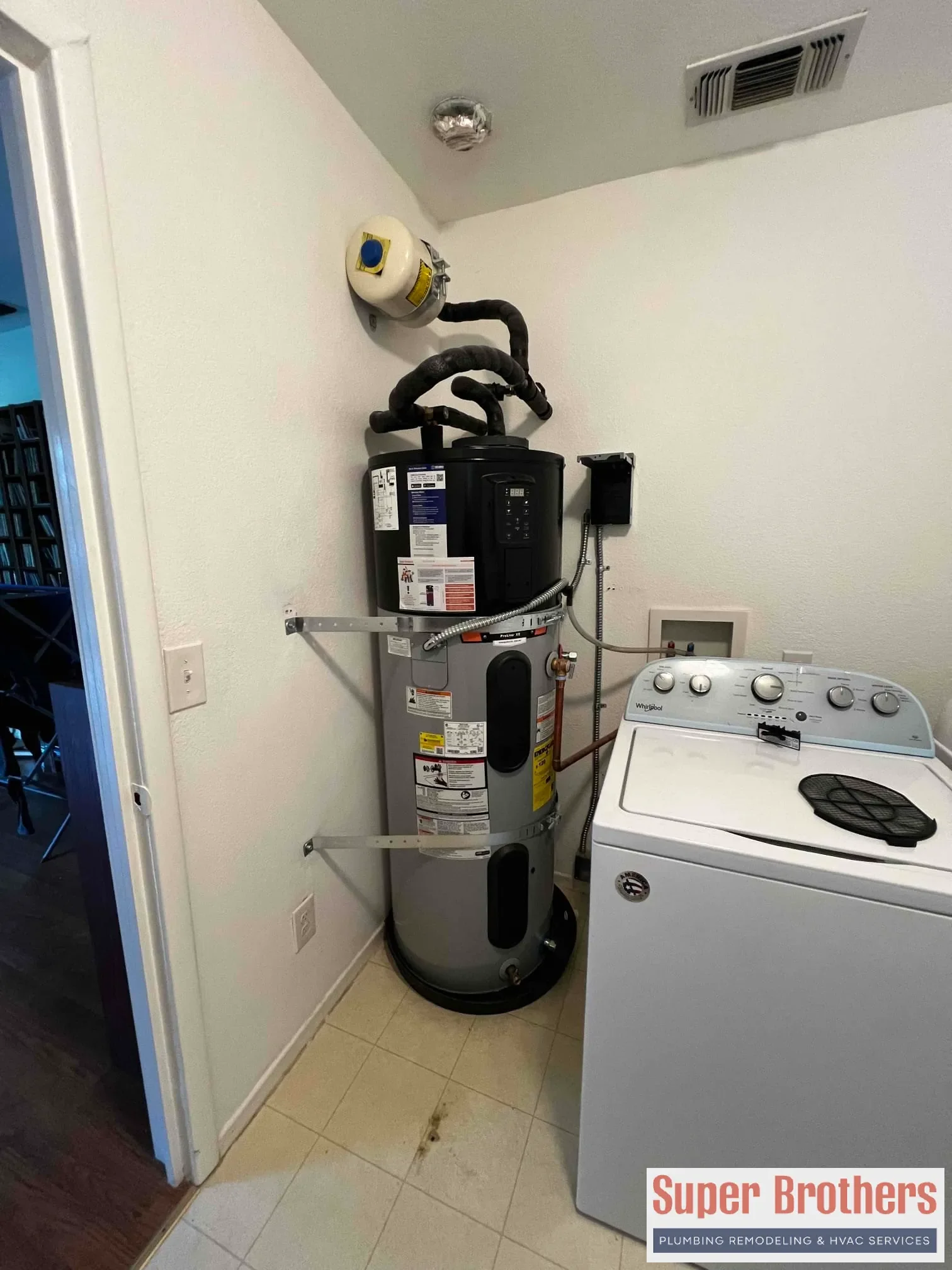
Typical installed totals: the numbers homeowners usually see
Below are common professional installed ranges people run into in Northern California. These are meant to help you sanity-check a quote. Your exact price depends on your home, the heater type, code upgrades, access, and permits.
| Water heater type | Common installed total (Sacramento region) | Common installed total (Bay Area) | When the price climbs |
|---|---|---|---|
| Standard tank (gas or electric) – like-for-like swap | $1,200–$3,000 | $1,400–$3,500 | Tight closets, vent/gas updates, permit/inspection add-ons, drain pan/drain work |
| High-efficiency tank (gas) or “power vent” tank | $2,000–$4,000 | $2,500–$5,000 | New venting, condensate drain, electrical for blower, longer labor time |
| Tankless (gas) – replacing existing tankless | $3,000–$6,500 | $3,800–$8,000 | Venting changes, water treatment/flush valves, tighter mounting spaces |
| Tankless (gas) – converting from a tank | $4,000–$9,000 | $5,500–$10,500+ | Gas line sizing, new venting, electrical, condensate drain, re-piping |
| Heat pump (hybrid electric) tank | $2,800–$6,500 | $3,500–$9,000 | 240V circuit/breaker work, space/airflow needs, mixing valve requirements, noise/ducting choices |
Bay Area note: prices tend to run higher because labor and overhead are higher, and “simple swaps” often turn into code updates in older or tighter housing stock. In San Francisco specifically, one large dataset reports an average around $1,753 for water heater replacement, with a typical range of $1,246–$2,342, and notes SF runs about 30% higher than the national average.
The real math: what you’re paying for (and why it varies)
A solid estimate is usually the big three plus a handful of “boring but important” parts:
- The unit (equipment) — the water heater itself.
- Labor — removal, installation, testing, and cleanup.
- Permits & inspection — required in many cities and counties, and the inspection verifies safety and code compliance.
- Materials — valves, connectors, vent pieces, drain pan, earthquake straps, sediment trap, expansion tank, mixing valve, and fittings.
- Haul-away & disposal — removing the old unit (sometimes full of sediment like a forgotten snow globe).
If you get a quote that’s just one number with no detail, ask for a line-item breakdown. A reputable installer won’t mind explaining what’s included. (If they act offended by basic questions about thousands of dollars… that’s your sign.)
Equipment cost (the unit)
Equipment prices vary a lot based on brand, size, and efficiency.
- Tank units usually have the lowest upfront equipment cost.
- Tankless units typically cost more, and conversions can add serious labor/material costs.
- Heat pump water heaters often cost more than basic electric tanks but can qualify for rebates and tax credits.
As a broad reference, many national pricing guides place tank units in the ballpark of $600–$2,500, and tankless replacements commonly in the higher range when installed professionally (especially if venting or gas sizing is involved).
Labor cost (the “it’s not just two hoses” part)
For a straightforward tank swap, labor is usually manageable. Labor climbs when the install is tricky: tight spaces, heavy stairs, older piping, new venting, gas work, electrical work, or code upgrades.
As a reference point, one national cost guide estimates labor alone around $150–$450 for a tank-style replacement and $600–$1,900 for a tankless replacement. In San Francisco, plumber hourly rates are commonly higher than many areas.
Translation: If you’re paying more, it’s usually because the job is taking longer, needs specialized work, or requires extra safety/code updates—not because someone is turning one wrench and calling it a day.
Permits & inspection (the “adulting fee,” but it matters)
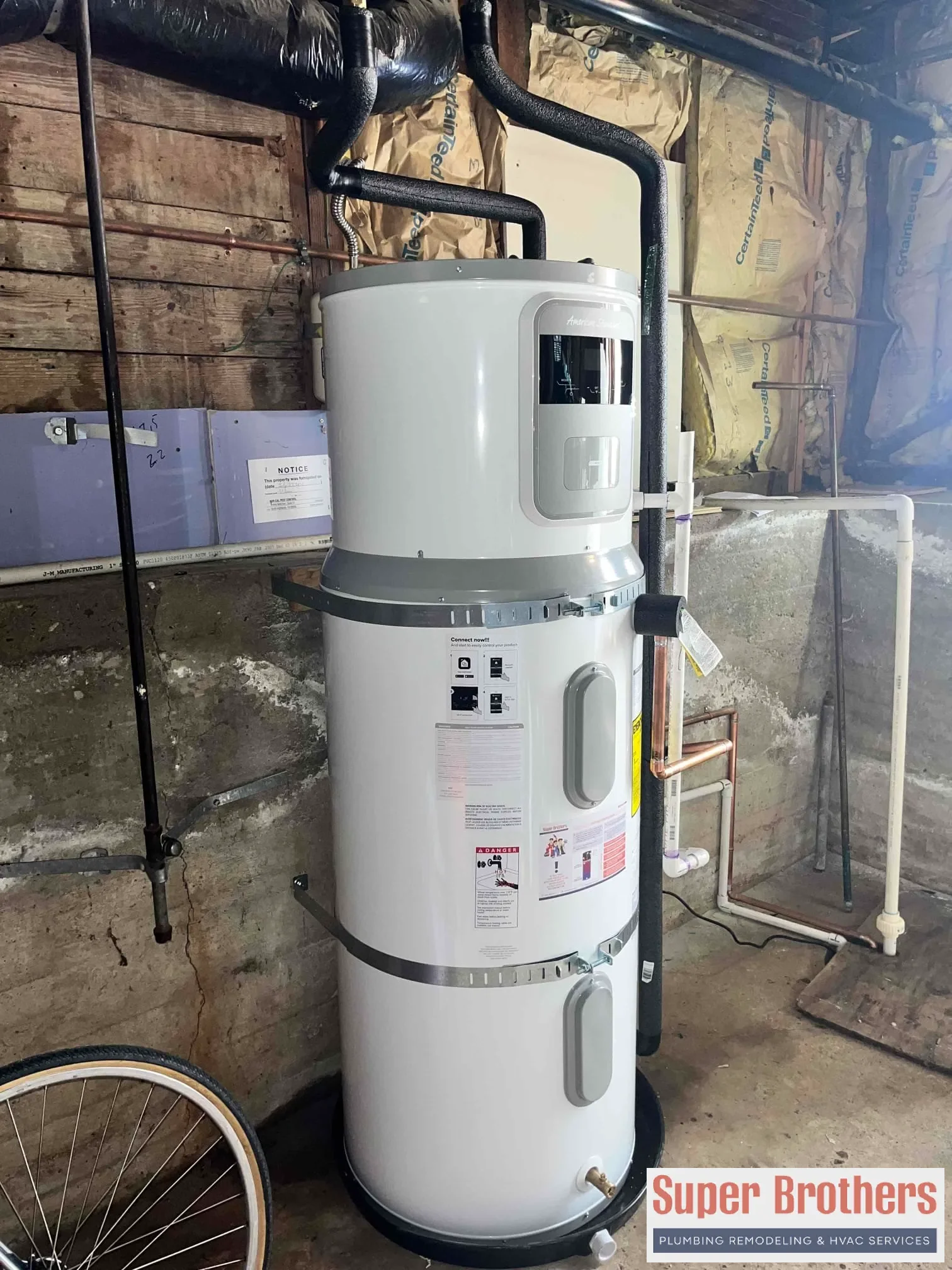
In Northern California, permits are common for water heater replacement. Permits aren’t just paperwork; they create a record and require an inspection that checks key safety items like venting, gas connections, pressure relief piping, seismic strapping, and safe clearances.
How much do permits cost? It depends on the city/county and the scope of work. A national pricing guide puts permits commonly around $25–$300.
Sacramento County example: Sacramento County’s published construction permit fee table lists a gas or electric replacement fee of $83 as part of its schedule. That doesn’t mean every homeowner always pays exactly $83—some jurisdictions add other fees or apply different fee structures. But it’s a helpful “real-world” anchor that permits don’t have to be outrageous.
City of Sacramento note: the City of Sacramento shows that a water heater permit can involve multiple fee categories (like a building permit fee, general plan fee, green building fee, and technology fee), and in some circumstances a city operations tax if a licensed contractor is the permit holder. In plain terms: sometimes what homeowners call “the permit fee” is actually a bundle of line items.
Bay Area reality: many Bay Area contractors will quote a simple water heater permit as “around $200.” That’s often a decent ballpark, but the exact amount depends on the city and what’s included. The important takeaway is simple: if a contractor wants to skip the permit, ask why. Usually it’s not because they’re trying to save you money—it’s because they don’t want the work inspected.
A simple cost breakdown example (so you can do quick quote math)
Let’s say you’re doing a common job: a 40–50 gallon tank replacement, same fuel, fairly accessible (garage or utility area).
| Line item | Typical range | Why it varies |
|---|---|---|
| Water heater (unit) | $600–$2,500 | Size, brand, efficiency, and venting style |
| Labor (tank swap) | $150–$450+ | Access, stairs, tight closet work, code upgrades |
| Permit & inspection | $25–$300 | City/county fee structures and scope |
| Common parts/materials | $150–$500 | Valves, flex connectors, straps, pan, vent pieces |
| Haul-away/disposal | $50–$200 | Distance, dumping fees, logistics |
Add those up and a lot of “normal” replacements land somewhere around $1,200–$3,500 depending on the unit choice and install complexity. That lines up with what many homeowners see in real quotes, and it also lines up with published cost data from large datasets in high-cost markets like San Francisco (where the range clusters tighter for typical replacements).
What makes a “simple swap” not so simple (and why your quote jumps)
Here are the most common reasons a replacement quote goes up in Sacramento and the Bay Area.
1) Your water heater is in a closet, attic, or tight indoor space
Garages are usually easier (more space, easier drainage options, easier airflow for heat pumps). Indoor closets often mean extra work: drain pans, drain lines, and careful handling to avoid water damage. In older homes—Midtown Sacramento bungalows or Bay Area Victorians—access and older plumbing can add labor time.
2) Venting and combustion air (gas units)
Gas water heaters need safe venting. If your old unit used an older vent, a chimney connection, or a setup that’s no longer acceptable, upgrades may be required. If you choose a power-vent unit, that can add cost because it changes the equipment and can require electrical work. One national guide estimates power-venting can add roughly $600–$1,100 compared with more basic venting setups.
3) Gas line sizing (tankless conversions)
This is the big wallet-buster. Tankless water heaters can demand higher gas flow than tank units. If your existing gas line is undersized, it may need to be upsized—sometimes from the meter to the heater. That’s why “tank to tankless” can jump from a few thousand to “okay, who turned on hard mode?” pricing.
4) Electrical upgrades (heat pump water heaters and some power-vent tanks)
Heat pump water heaters typically need a 240V circuit and a properly sized breaker. If your panel is full, your wiring is older, or the run is long, you may need electrical work. This is common when switching from gas to a heat pump water heater.
Programs and utilities also may require specific installation items for rebate eligibility (for example, a thermostatic mixing valve requirement is common in some programs). This can affect both scope and cost.
5) Pressure and safety components (small parts that matter)
Depending on your setup, you might need or benefit from:
- Expansion tank
- Pressure regulator checks
- Updated shutoff valves
- Thermostatic mixing valve (especially with certain rebate programs)
- Correctly routed temperature/pressure relief (T&P) discharge
These parts aren’t glamorous, but they protect your plumbing and help prevent scalding and pressure damage. One national guide lists expansion tank add-ons commonly in the $90–$350 range (plus labor) depending on the setup.
6) Hard water and sediment (hello, Sacramento)
Much of the Sacramento region deals with harder water and sediment. Sediment can shorten a tank heater’s life, and tankless units can require regular descaling to stay efficient. That doesn’t always change the replacement price, but it can change what “smart add-ons” make sense (like flush valves/service ports for tankless, or a maintenance plan that keeps performance from sliding).
Real-world scenarios (so your quote has a “bucket” to fit into)
Scenario A: Straight swap in a garage (tank to tank, same fuel)
- Remove old unit, haul away
- Install similar-size tank
- Replace connectors/shutoff valve as needed
- Seismic straps, basic code corrections
- Permit and inspection
Typical total: usually lands in the “normal” tank range for your region. In SF, published averages and ranges provide a good sanity check for what many homeowners pay for a standard replacement.
Scenario B: Closet install with drain pan and drain line
- Everything in Scenario A
- Add or update pan + drain line
- Potential drywall/finish touch-ups if access is tight
Typical total: commonly mid-to-upper end of tank ranges.
Scenario C: Tankless replacement (existing tankless)
- Replace tankless with tankless
- Flush valves/service ports and filter considerations
- Possible venting updates depending on the model
Typical total: often several thousand, but usually less painful than converting from a tank.
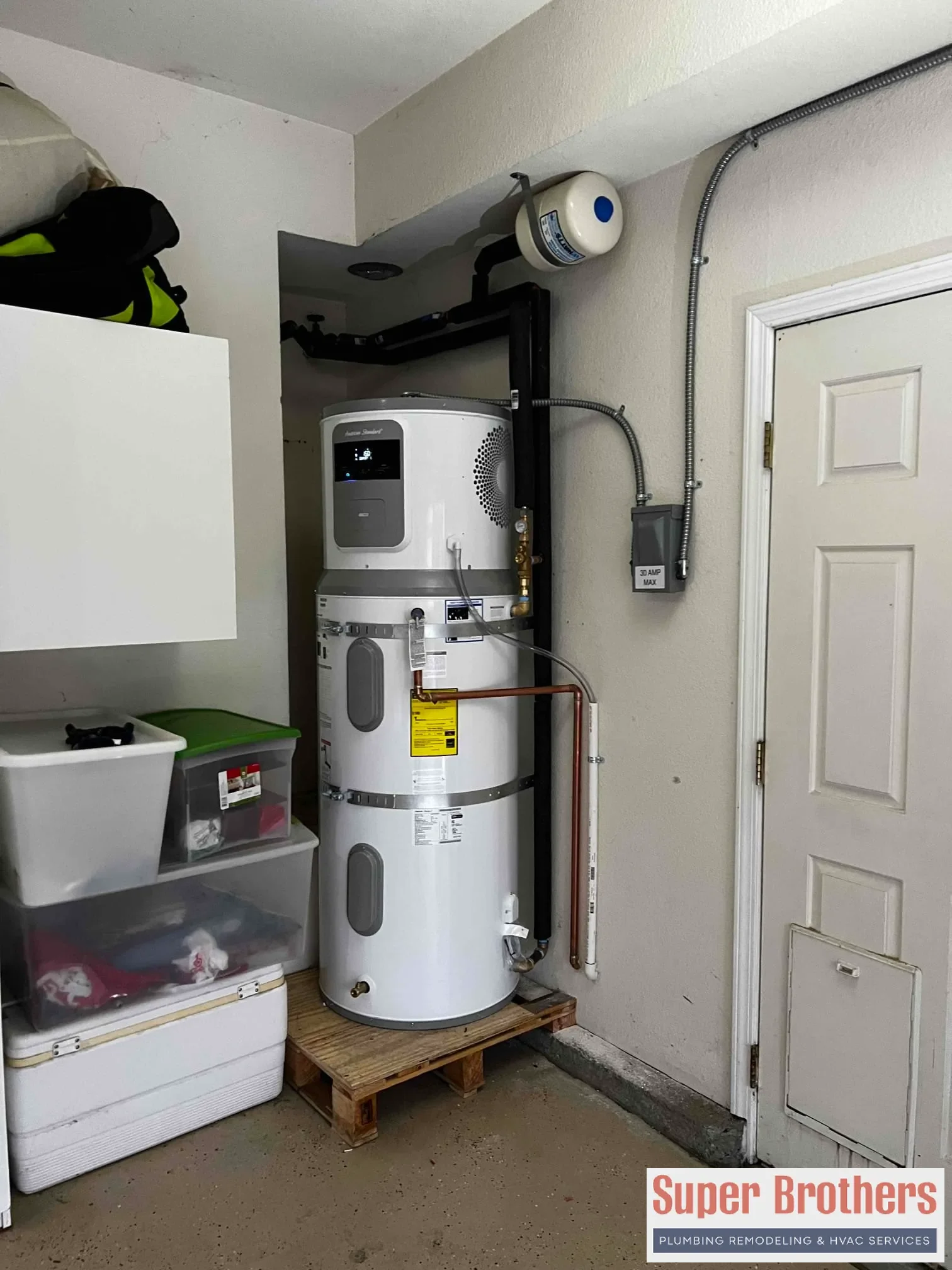
Scenario D: Switching to a heat pump water heater
- Swap out gas or electric tank for a heat pump unit
- Electrical circuit/breaker work (if needed)
- Space and airflow considerations
- Mixing valve requirements may apply depending on incentive rules
Typical total: can range widely. In San Francisco, local reporting has cited heat pump water heater installs often landing in the $6,000–$9,000 range before incentives.
Sacramento vs. Bay Area: what’s different in practice?
Sacramento region (Sacramento, Elk Grove, Folsom, Roseville, Davis)
- Garages are common, which often keeps installation simpler.
- Harder water can mean more sediment and more benefit from maintenance.
- Permitting can be straightforward in many areas, but fee structures vary city vs. county and can include multiple categories.
- Big opportunity: if you’re in SMUD territory, a heat pump water heater may qualify for a rebate up to $3,000 (subject to funding availability), which can change the “real cost” dramatically.
Bay Area (San Francisco, Oakland, San Jose, Peninsula)
- Higher labor costs are the norm.
- Older homes often mean older piping, tighter closets, and more upgrades needed to meet current requirements.
- Venting complexity is common, especially in older remodels and chimney-adjacent installs.
- Some incentives are very location-specific. For example, CleanPowerSF has offered up to $1,200 in bill credits for eligible customers who upgrade to a heat pump water heater (paid out monthly over two years).
Rebates and tax credits that can cut your real cost
In Northern California, incentives can seriously change the math—especially if you’re switching from gas to a heat pump water heater.
1) Federal tax credit (deadline matters)
The federal Energy Efficient Home Improvement Credit (Section 25C) covers 30% of certain qualified costs up to a special cap of $2,000 per year for qualified heat pump water heaters. The IRS notes eligibility for qualifying improvements made through December 31, 2025. (If you’re reading this close to the deadline, this is not the year to “eventually get around to it.”)
2) Golden State Rebates (PG&E/SCE/SDG&E customers)
California has also offered “instant rebate” programs for heat pump water heaters. One statewide program lists up to $900 instant rebates, with specific amounts based on tank size and whether you’re replacing gas or electric. Eligibility depends on having an electric account with a participating utility (including PG&E).
3) SMUD heat pump water heater rebate (Sacramento-area)
SMUD lists a heat pump water heater rebate of up to $3,000 (subject to funding availability) when you use a participating contractor and install a qualifying unit. SMUD also notes rebates can often be stacked with other incentive programs and tax credits (when available).
4) Bay Area programs change often (check your address)
Bay Area rebates vary by county and program. For example, BayREN previously offered a homeowner rebate for heat pump water heaters, but states that rebate is no longer available as of April 2024. The fastest way to find what’s active now is a ZIP-code-based incentive lookup.
Important: incentives can have product eligibility lists, installation rules, and timing requirements. Confirm eligibility in writing (don’t rely on “yeah, I think it qualifies”).

How to compare quotes without getting played
To avoid overpaying, don’t just compare the final number. Compare what’s included.
Ask these questions (and expect clear answers)
- Is the permit included? Who pulls it and schedules the inspection?
- Which parts are being replaced? Shutoff valve, connectors, sediment trap, straps, pan, vent components.
- What’s the warranty? Manufacturer warranty vs. installer labor warranty.
- Is haul-away included? (It should be.)
- Will you test everything? Gas leak test, venting check, safe temperature settings, proper T&P discharge routing.
- What could change the price? Ask what “unknowns” might trigger add-ons once they arrive.
Red flags
- “No permit needed.” Sometimes there are narrow exceptions, but most of the time this is a shortcut you don’t want.
- Huge price with vague details. If they can’t explain it, don’t pay it.
- Pressure tactics. “Sign now or the price doubles” is not a trustworthy way to sell plumbing.
- No written estimate. That’s a “nope.”
Repair vs. replace: when replacement is actually the cheaper move
Not every lukewarm shower means you need a new unit. But replacement is often smarter when:
- The tank is leaking (usually game over).
- The unit is near or past expected lifespan.
- Repairs are stacking up and hot water is still unreliable.
- You’re planning a remodel and want to avoid a mid-project failure.
Many published cost guides suggest tank-style water heaters often last roughly 6–15 years, while tankless units can last 20 years or more with proper care. Water quality and maintenance make a big difference.
Choosing the right replacement (so you don’t pay twice)
If you want the lowest upfront cost
Stick with a like-for-like tank replacement (same fuel, similar size), assuming your setup can be brought up to code without major work.
If you want better efficiency without a full conversion headache
Consider a higher-efficiency tank model or (if your home is a good fit electrically) a heat pump water heater—especially if rebates apply.
If you want long showers without the “we’re out of hot water” family meeting
Tankless can be great, but don’t buy the hype without confirming gas line sizing and venting requirements. A good tankless install is fantastic. A rushed one is a money pit.
FAQ: the questions homeowners actually ask
How long does a typical replacement take?
A standard tank swap is often a same-day job. Many straightforward replacements take a few hours. Conversions or upgrades can take longer.
Should I buy the water heater myself to save money?
Sometimes, but not always. You might save on equipment markup, but some installers won’t warranty customer-supplied equipment. If you buy it yourself, confirm the installer will install it and what warranty they’ll provide.
Is a heat pump water heater worth it in Northern California?
Often yes—especially in a garage where airflow is available. Upfront cost can be higher, but rebates and the federal tax credit can reduce net cost. Make sure your electrical setup and installation location are a good fit.
Do I really need a permit?
In many Northern California cities and counties, yes. Permits usually require an inspection, which protects you and can help during resale or insurance issues.
Why did one company quote $1,800 and another quote $4,000 for “the same” heater?
Usually it’s not actually the same scope. One quote may include permit + code upgrades + new valves + pan + vent work, while the cheaper one is bare-minimum. Compare line items, not just totals.
What’s the biggest cost surprise in the Bay Area?
Closet installs and venting/gas line upgrades—especially when converting to tankless or switching fuels.
What’s the biggest cost surprise around Sacramento?
Permitting/code add-ons when the old installation was done before current standards (or without a permit), plus hard-water-related maintenance needs if you’re moving to tankless.
Bottom line
The “actual” cost to replace a water heater is a range based on the unit type, install difficulty, and local labor and permit realities. Around Sacramento, you may benefit from strong local incentives (especially in SMUD territory). In the Bay Area, plan for higher labor and a higher chance of code upgrades in older homes.
If you want the best price and a safe install, do this simple three-step move:
- Get 2–3 quotes with line items.
- Make sure permits and inspections are included.
- Compare scope (parts, upgrades, warranty), not just the final total.
Hot showers are a basic human right. Let’s keep yours from turning into a seasonal subscription.
Super Brothers Quality
Choose Super Brothers Plumbing Heating & Air because we use top-tier materials, deliver honest workmanship, and back every job with a real warranty. Our pricing is fair and transparent—no hidden fees, ever.
We pull the permits, build to California code, and pass inspection. Our licensed, highly experienced team handles full plumbing and heating/air replacements and installations, so the job’s done right the first time.
- Top-tier materials
- Honest, quality service
- Workmanship warranty
- Fair, transparent pricing (no hidden fees)
- Permits handled; California code compliant; passes inspection
- Licensed & experienced in plumbing and HVAC installs





Refer Friends, Reap Rewards

Share our expert plumbing services with friends and family. For every successful referral, you earn cash rewards. Refer Now

Ready To Experience Super Brothers Difference! Let’s Start a Conversation!
Related Services
Financing Options

Super Brothers offers an Installment Payment Plan with 0% Interest for Projects over $1000

Fin tech company that provides payment solutions in the home improvement sector.

Flexible financing for your next home improvement project

Wells Fargo Home Projects Credit Card