Stable Water Pressure Starts With a Working PRV
If your home’s water pressure feels “strong,” that might not be a good thing. Many homes have incoming pressure that is higher than what plumbing fixtures and appliances are designed to handle long-term. The result is slow damage that builds up quietly: worn-out faucet cartridges, leaking supply lines, running toilets, noisy pipes, premature appliance failure, and in the worst cases, burst lines and water damage.
A PRV, or pressure reducing valve, is the device that keeps that incoming pressure under control before it spreads through your plumbing system. When it’s working correctly, you get steady pressure at sinks and showers, less stress on every connection point, and a plumbing system that lasts longer. When it starts failing, the entire house feels it, even if you can’t immediately see it.
This article is written for homeowners who want a clear answer and a fast solution. If you suspect high pressure, if your PRV is old, or if you’re dealing with recurring leaks and worn fixtures, schedule a PRV inspection now. If replacement is needed, we can handle it quickly, set your pressure correctly, and help protect your home from preventable damage.
What a PRV Does and Why It Matters
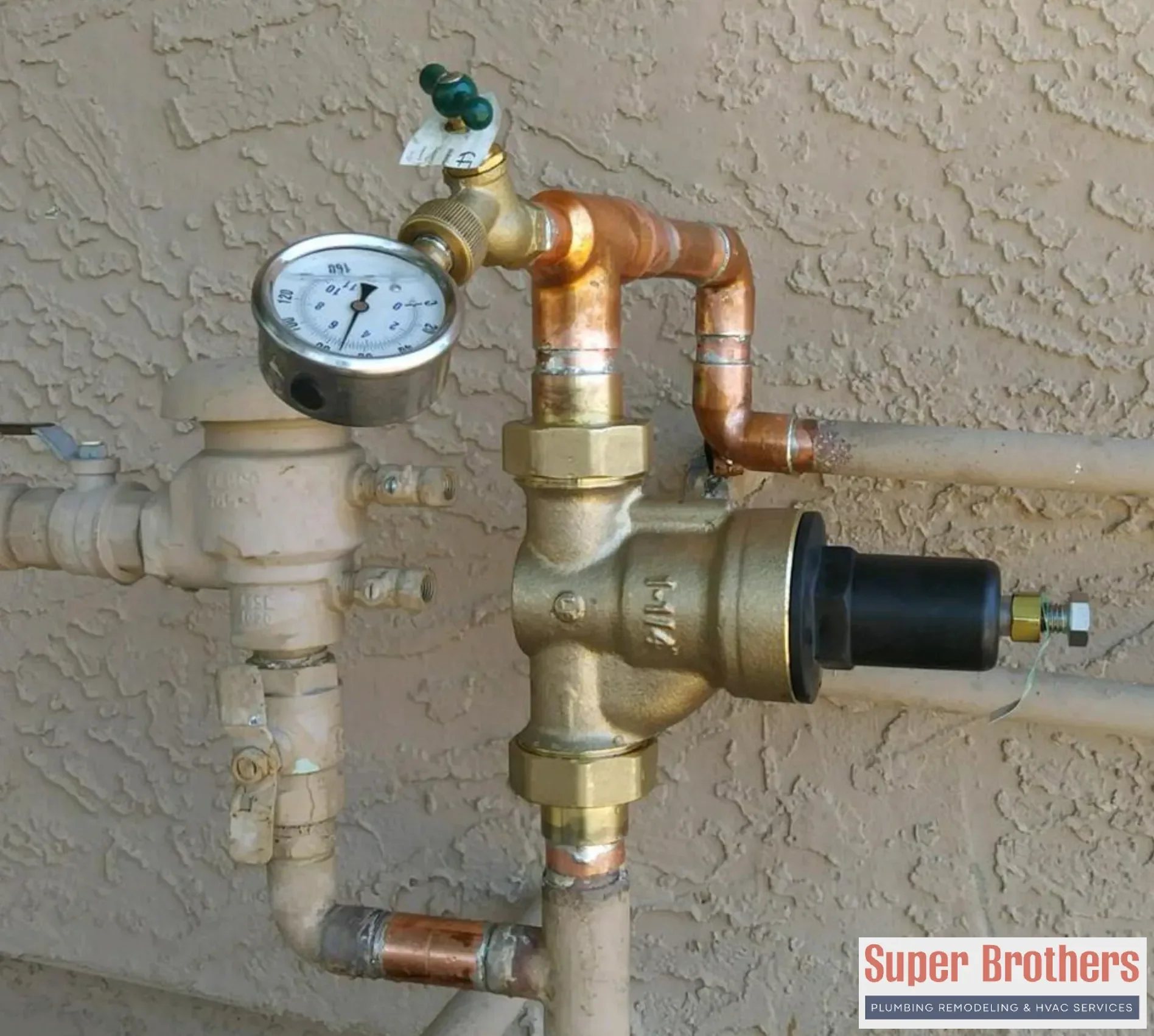
Your municipal water supply or well system can deliver water at a wide range of pressures. In many areas, pressure can spike at different times of day depending on demand, pumping cycles, and neighborhood elevation. Your home, however, runs best at a controlled pressure range. A PRV is installed on the main water line, typically near where the water enters the home, to reduce and stabilize that pressure.
Inside the PRV is a spring-and-diaphragm mechanism that reacts to pressure changes. When incoming pressure is too high, the valve restricts flow to bring it down to a safer level. When pressure drops, the valve opens more to maintain consistent delivery. The goal is simple: protect the entire home by keeping pressure stable and predictable.
Without a functioning PRV, your plumbing system experiences higher force at every joint, every shutoff valve, every supply line, every appliance inlet, and every fixture. That force doesn’t just increase water flow. It increases wear, vibration, and the chance of leaks. Over time, high pressure can shorten the life of water heaters, dishwashers, washing machines, refrigerator supply lines, and even toilet fill valves.
If you’ve never tested your home’s water pressure, you’re guessing. A professional inspection removes the guesswork and gives you a clear reading of what’s happening at the source.
How High Water Pressure Damages a Home
High pressure creates constant mechanical stress. Even if nothing is leaking today, high pressure pushes seals harder, flexes supply lines more aggressively, and amplifies small weaknesses in older connections. That’s why pressure issues often show up as “random” leaks in different places over time, instead of one obvious failure.
It also increases what homeowners often describe as “slam” or “bang” when a fixture shuts off quickly. That can be related to water hammer, and while water hammer has multiple causes, high pressure makes it worse and makes the entire system louder. In a quiet house at night, the noise can be your warning sign before visible damage appears.
Many plumbing manufacturers design components to operate within specific pressure limits. When pressure runs high for months or years, you get more frequent cartridge failures, dripping faucets, failed solenoids in appliances, leaking toilet internals, and burst washing machine hoses that can flood a laundry room in minutes.
The problem with high pressure is that it’s easy to ignore when everything still “works.” But the cost shows up later, usually at the worst time, when you have guests over, when the weather turns cold, or when you’re already dealing with another repair.
Common Signs Your PRV May Be Failing
A failing PRV doesn’t always fail all at once. Many start by drifting out of calibration or reacting slowly to changes. That’s when you notice inconsistent pressure from one moment to the next, or pressure that seems fine in the morning and extreme later in the day.
Watch for pressure that surges when you turn on a faucet, showers that fluctuate from strong to weak, or fixtures that feel “too forceful” even when partially opened. Another red flag is frequent replacement of faucet cartridges, toilet fill valves, angle stops, and supply lines. If these parts keep failing, it’s often a symptom, not the root cause.
You might also notice leaking at connections that previously held fine, dripping after fixtures shut off, or banging noises in pipes when appliances like dishwashers and washing machines start or stop. High pressure can also cause small pinhole leaks or weeping joints to appear in older piping systems.
Sometimes the clearest sign is simply a pressure reading that’s too high. Many homes never get tested until there’s a problem. If your PRV is older, if you’ve had plumbing updates, or if you’ve recently moved into a home and don’t know the service history, an inspection is a smart step.
Why Scheduling This Month Makes Sense
Pressure problems rarely improve on their own. If your PRV is drifting, sticking, or failing to regulate, the safest move is to address it before it turns into a leak, a flood, or an appliance failure. Scheduling this month also helps you avoid the seasonal bottlenecks that hit plumbing companies when temperatures drop and emergency calls spike.
Even in mild climates, late-year demand increases because households use more hot water, run more laundry, host family gatherings, and put more load on fixtures and appliances. In colder climates, winter introduces a second risk: freezing conditions and pressure problems don’t mix well.
Booking now means you get a calm, diagnostic-first visit. We can test pressure accurately, confirm whether the PRV is performing correctly, and schedule replacement quickly if needed. Waiting often turns a simple preventative service into an urgent repair with more disruption and more stress.
Cold Weather and High Pressure Are a Bad Combination
When temperatures drop, plumbing materials behave differently. Rubber seals stiffen, plastic components become less forgiving, and minor weaknesses can open up under pressure. If parts of the plumbing system are exposed to colder air, such as exterior walls, garages, crawl spaces, or hose bib lines, the risk increases.
High pressure pushes harder against every seal at the exact time those seals are least flexible. That can turn a slow drip into a steady leak. It can also worsen water hammer and vibration because the system is under more stress overall.
Even if your pipes never freeze, cold weather can still create conditions where pressure issues become more obvious. Toilets can start running, shower valves can act up, and supply lines can develop leaks at compression fittings and shutoff valves.
If you want your home to be more resilient through the season, stable pressure is one of the most practical upgrades you can make.
What Happens When You Wait Too Long
Delaying PRV service often leads to repeated “small” repairs. A faucet gets a new cartridge, then a toilet starts leaking, then a dishwasher line fails, then you replace a washing machine hose, then the water heater relief valve starts dripping. Each of these repairs costs time and money, and none of them fix the underlying pressure issue if that’s what’s driving the wear.
In more serious cases, high pressure can contribute to sudden failures, like a burst supply line or a fitting that gives way. Water damage is expensive, disruptive, and stressful. It can affect flooring, drywall, cabinets, and personal belongings. The cost difference between a scheduled PRV replacement and an emergency water cleanup is not even close.
There’s also a hidden cost: your appliances may not last as long. Water-using appliances rely on controlled pressure to protect internal valves and hoses. Excess pressure increases the chance of internal leaks and premature wear.
If your PRV is questionable, the smartest time to act is before you’re forced to.
How We Inspect Water Pressure and PRV Performance
A proper PRV inspection starts with real measurements, not guesses. We connect a pressure gauge where it will provide an accurate reading of your home’s incoming and regulated pressure. We evaluate how pressure behaves when fixtures turn on, when they shut off, and when multiple fixtures run at once.
We’re looking for stability, response time, and whether the PRV is controlling pressure consistently. A PRV that’s sticking may allow spikes. A PRV that’s worn may “creep” upward over time. A PRV that’s failing may not hold a set pressure at all.
We also look at the overall condition of the installation. We check accessibility, shutoff operation, corrosion, and the surrounding piping. If your system is considered “closed” after pressure reduction, we may recommend additional protection, such as addressing thermal expansion, depending on your setup.
At the end of the inspection, you get a clear explanation of what we measured, what it means, and whether adjustment, repair, or replacement is the best next step.
When Adjustment Is Enough and When Replacement Is the Right Call
Some PRVs can be adjusted if the valve is still healthy and responsive. If pressure is simply set incorrectly and the internal components are in good shape, a professional adjustment may restore the correct range.
However, many PRVs fail due to age, mineral buildup, internal wear, or diaphragm breakdown. In those cases, adjustment is temporary at best. A worn PRV may adjust today and drift again later. If a valve is creeping, sticking, or not reacting cleanly to changes, replacement is usually the more reliable solution.
Replacement is also common when a PRV is older and the homeowner wants long-term reliability. If you’re already dealing with fixture wear and recurring leaks, replacing an aging PRV often pays for itself by preventing repeat repairs.
We’ll tell you straight if your PRV is still worth keeping. If it’s not, we’ll recommend replacement and explain why.
What PRV Replacement Includes
A proper PRV replacement is more than swapping a part. The goal is to install the correct valve for your home, ensure clean connections, confirm the main shutoff is functional, restore service safely, and calibrate pressure to a stable, protective level.
We shut off the water supply, remove the old valve, prepare the connection points, and install the new PRV in the correct orientation. We then restore water service, check for leaks, and set the regulated pressure to a sensible range based on your home’s needs and the condition of your plumbing system.
After installation, we re-test pressure under real usage. We want to confirm that pressure holds steady, responds correctly, and does not spike. If there are related issues that affect pressure stability, such as failing shutoffs or other worn components near the install, we’ll point them out and discuss your options.
Most homeowners notice the difference immediately. Water flow feels smoother and more consistent, banging noises often reduce, and fixtures stop feeling like they’re being blasted by excess force.
What Pressure Should Your Home Be Set To
There isn’t one perfect number for every home, but there are practical guidelines. Many households run comfortably in a moderate range that supports good shower performance while protecting fixtures and appliances. When pressure is too high, you get more wear. When pressure is too low, you notice weak showers and slow fill times.
We set pressure based on measurements and real-world performance in your home, not a random guess. We also take into account how many stories your home has, how your plumbing is routed, and whether you have pressure-sensitive fixtures or older piping that benefits from a more conservative setting.
If you’ve been living with high pressure, the goal is not to reduce your comfort. The goal is to keep the home protected while maintaining a strong, steady experience at showers and sinks.
If you want a specific target, we can explain what we recommend and why, then confirm it with testing after the adjustment is made.
How a New PRV Protects Fixtures, Appliances, and Your Water Heater
Every time a fixture opens and closes, pressure changes ripple through the plumbing system. A working PRV dampens those swings and reduces the peak force that hits cartridges, seals, and appliance valves.
Faucets and shower valves last longer because their internal components are not constantly fighting excess force. Toilets tend to run quieter and more reliably because fill valves and seals aren’t being over-pressurized. Washing machines and dishwashers benefit because inlet valves and hoses see less stress every cycle.
Your water heater also benefits. High pressure can make relief valves more likely to drip and can contribute to wear at connections. Stable pressure helps the whole system operate the way it was designed to.
If you’ve been treating symptoms around the home, a PRV replacement can be the upstream fix that reduces the need for repeated downstream repairs.
Outdoor Faucets, Irrigation, and Pressure at the Edges of the Home
Outdoor hose bibs, irrigation lines, and exterior wall plumbing are often where pressure problems show up first. These areas deal with temperature swings, exposure, and components that can wear faster. If pressure is too high, hose connections leak more often, vacuum breakers fail, and fittings experience more stress.
Exterior plumbing is also more vulnerable when temperatures drop. Even if your climate doesn’t regularly freeze pipes, cold snaps can make seals stiffer and create conditions where high pressure is more likely to push a weak connection into a leak.
A properly working PRV helps protect the entire system, including these edge zones. It keeps pressure from surging into hose bib lines and irrigation feeds, which helps reduce nuisance leaks and wear on outdoor plumbing parts.
If you’ve had repeated issues outside, it’s worth testing your pressure and confirming the PRV is doing its job.
What You’ll Notice in the First Month After Replacement
Homeowners often notice smoother, more predictable flow at fixtures. Showers feel steady instead of fluctuating, and faucets respond more consistently. If you’ve had banging or vibration, it often improves because the system isn’t operating at excessive force.
You may also notice fewer little issues popping up. That’s the point. Stable pressure reduces the constant stress that creates “mystery leaks” and repeated part failures. Over time, that means fewer calls for dripping faucets, fewer failed toilet parts, and less wear on supply lines and appliance inlets.
Just as important, you get peace of mind. You’ll know the actual pressure in your home, you’ll know your main pressure protection is working, and you’ll be far less likely to deal with a preventable water damage event tied to pressure overload.
If your PRV was clearly failing, replacement can feel like a reset for the whole plumbing system.
PRV Inspection and Replacement FAQ
If you’re wondering whether you even have a PRV, many homes do, but not all. Older homes sometimes lack one, and some homes have one that’s buried, hard to access, or no longer functioning. A professional can typically locate it quickly and confirm whether it’s present and operational.
If you’re asking whether high pressure is “really a problem,” the honest answer is yes, when it’s above what fixtures and appliances are meant to handle. The damage is often slow, then sudden. Testing pressure is the fastest way to get a real answer.
If you’re concerned that reducing pressure will make showers weak, the goal is stable comfort, not a drastic drop. We set pressure to a protective level that still supports daily use, and we verify performance after the work is done.
If you’ve already had multiple leaks, replacing the PRV won’t undo old damage, but it can prevent the next round. It removes the ongoing stress that causes new failures to keep showing up in different places.
Book Your PRV Inspection and Replacement Today
If your water pressure feels too strong, if it fluctuates, if you’re hearing banging, or if you’re dealing with recurring leaks and worn fixtures, don’t wait for the next failure. A PRV inspection is a quick, practical service that tells you exactly what’s happening at your main water line.
Scheduling this month gives you the best chance to handle the problem on your timeline instead of in an emergency. If your PRV is still good, we’ll confirm it and set it correctly. If it’s failing, we’ll replace it, calibrate the pressure, and help protect your home from the kind of damage that costs far more than preventative service.
Call now to schedule your PRV inspection. If replacement is needed, we’ll get you on the calendar quickly and restore stable, safe water pressure throughout your home.
Your plumbing system handles thousands of pressure cycles every month. Let’s make sure it’s protected at the source.
Super Brothers Quality
Choose Super Brothers Plumbing Heating & Air because we use top-tier materials, deliver honest workmanship, and back every job with a real warranty. Our pricing is fair and transparent—no hidden fees, ever.
We pull the permits, build to California code, and pass inspection. Our licensed, highly experienced team handles full plumbing and heating/air replacements and installations, so the job’s done right the first time.
- Top-tier materials
- Honest, quality service
- Workmanship warranty
- Fair, transparent pricing (no hidden fees)
- Permits handled; California code compliant; passes inspection
- Licensed & experienced in plumbing and HVAC installs




Refer Friends, Reap Rewards
Share our expert plumbing services with friends and family. For every successful referral, you earn cash rewards. Refer Now

Ready To Experience Super Brothers Difference! Let’s Start a Conversation!
Related Services
Financing Options
Super Brothers offers an Installment Payment Plan with 0% Interest for Projects over $1000

Fin tech company that provides payment solutions in the home improvement sector.
Flexible financing for your next home improvement project
Wells Fargo Home Projects Credit Card