Limitations that come with PEX tubing
PEX (cross-linked polyethylene) has earned its place as a go-to water distribution material because it is flexible, quiet, corrosion resistant, and fast to install compared with rigid piping. But it is not a “use it anywhere, any way” product. PEX has real constraints around temperature, pressure, sunlight (UV), physical damage, and chemical exposure. Most PEX problems in the field come from ignoring those constraints, mixing incompatible materials, or installing it like copper without accounting for expansion, support, and protection.
The right way to think about PEX is: it performs extremely well when installed within its published ratings and protected from avoidable hazards. The wrong way to think about PEX is: it’s plastic, so it’s indestructible. It can be cut, kinked, chewed, abraded, overheated, degraded by UV, and weakened by certain chemicals and environments. If you plan for these risks up front, you get decades of reliable service. If you don’t, you can end up with premature leaks hidden behind drywall, intermittent pressure issues, noisy piping, or fittings that fail under stress.
This guide walks through what to check before installation, how to respect temperature and pressure ratings, how to protect PEX from UV and heat sources, and how to prevent mechanical and chemical damage. It also covers what to do after installation: testing, labeling, and long-term protection (including rodents). Always follow the tubing and fitting manufacturer’s installation instructions and confirm local code requirements (IPC/UPC and local amendments), especially for concealed spaces and fire-rated assemblies.
Before installation: inspection, handling, and storage
Before you install a single foot of tubing, inspect it. Do not install PEX that shows cuts, cracks, deep gouges, abrasions, crushed sections, kinks that cannot be properly repaired, or any sign of chemical attack (softening, swelling, discoloration, or surface crazing). The cost of replacing damaged tubing in your hand is nothing compared with the cost of opening walls later. If a coil has been dragged across concrete or sharp gravel, assume the outside jacket has been compromised and inspect carefully along the full run, not just at the ends.
Handling matters. Avoid pulling PEX over sharp edges, nails, or rough masonry. Don’t yank on tubing so hard that it “burns” across a stud hole; that friction can score the exterior. When feeding through framing, keep the path smooth and protect the tubing at every contact point that could rub during thermal expansion or building movement. If you are installing in metal studs or anywhere the tubing passes through a metal edge, use grommets or sleeves designed for that purpose.
Storage matters too. Keep tubing out of direct sunlight and away from heat sources while it sits on the jobsite. Most manufacturers limit total UV exposure time (and the limit varies), so leaving coils outside for weeks can silently reduce the life of the pipe. Store tubing in the original packaging when possible, up off the ground, and away from oils, solvents, fuels, adhesives, paint thinners, and other chemicals that can damage plastic over time.
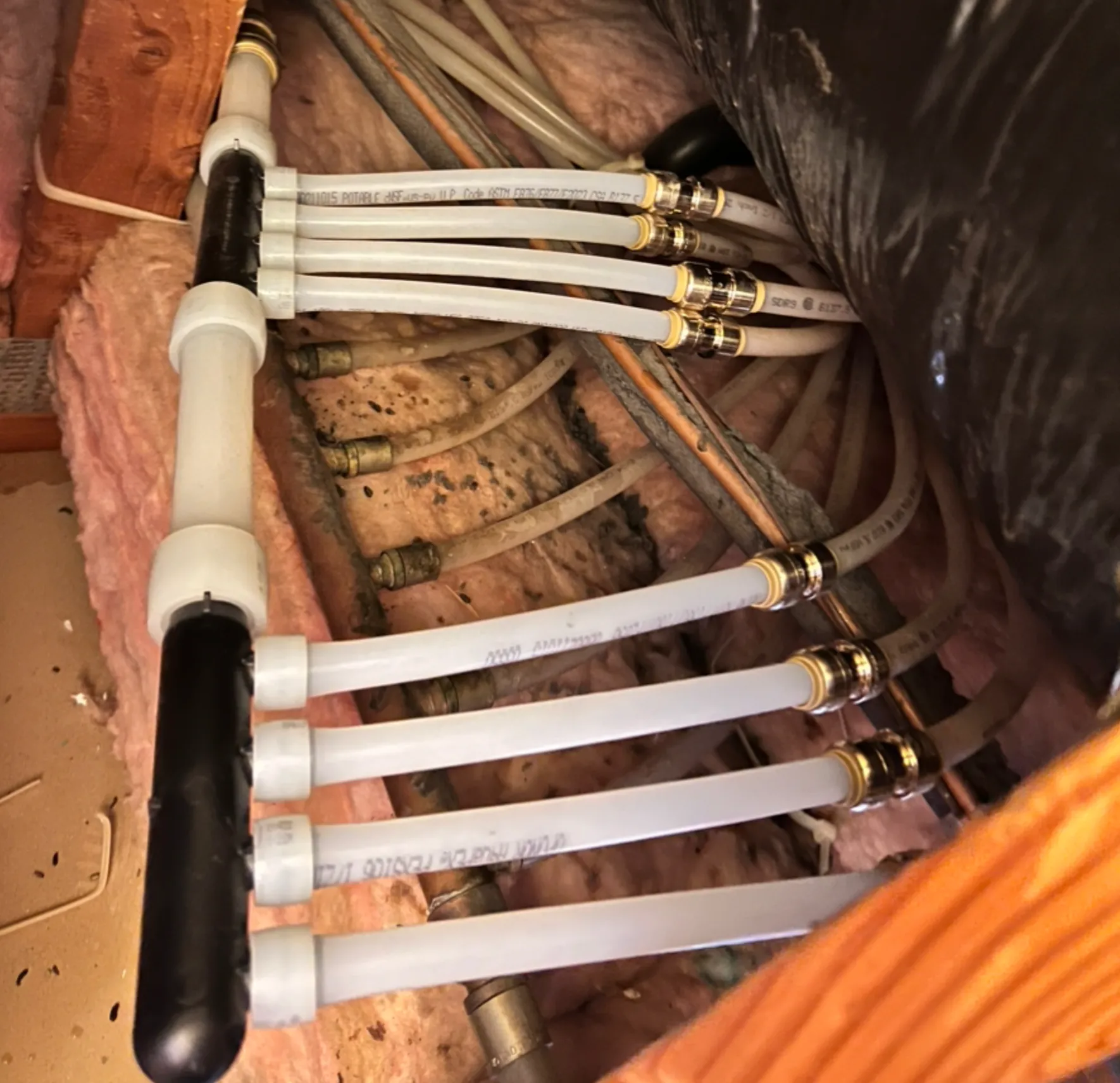
Plan your system before you run it. Decide whether you are using a trunk-and-branch layout or a home-run manifold system, and verify fixture units, sizing, and pressure loss. PEX makes it easy to “wing it,” but poor planning leads to too many fittings, long dead legs, slow hot water delivery, pressure drops, and noisy velocity issues. A clean plan also reduces the amount of tubing sitting exposed while other trades are working nearby.
Code, concealment, and fitting selection
PEX tubing is only half the system; the fittings and connection method matter just as much. Different jurisdictions treat concealed fittings differently, and rules can change based on whether the fitting is accessible, behind drywall, in a ceiling cavity, or inside a rated wall. Some areas restrict certain “push-to-connect” or “stab-in” fittings in concealed spaces. Even where they are allowed, hidden fittings should be approached cautiously: accessibility, long-term sealing method, and the ability to inspect later all matter.
Choose a fitting system that matches your tubing type and application (for example, crimp, clamp, expansion, press, or compression systems as approved by the tubing and fitting manufacturers). Do not mix brands or systems unless the manufacturer explicitly states compatibility. The safest approach is to keep tubing, fittings, and tools within a single, listed system so you aren’t guessing about tolerances, ring materials, or test certifications.
If you are transitioning to copper, CPVC, or threaded metal, use listed transition fittings designed for that purpose. Avoid “creative” adapters, excessive thread sealants, or incompatible compounds. Many failures blamed on “bad PEX” are actually failures of a transition, an over-tightened threaded connection, or a sealant that attacked a polymer component over time.
Temperature and pressure: respect the ratings, and understand derating
PEX has published temperature and pressure limits, and those limits are not suggestions. The tubing is typically rated to specific combinations of temperature and pressure (for example, common ratings you’ll see are around 73°F at higher pressure and lower pressures at hotter temperatures). The exact numbers depend on the product standard, manufacturer, and listing. The key point is that as temperature increases, the allowable working pressure decreases. That is normal material behavior and is why manufacturer derating charts exist.
Do not assume that “hot water” is always within rating. Water heaters can produce higher-than-expected outlet temperatures during recovery, during certain control failures, or if a mixing valve is missing or misadjusted. Recirculation systems can keep hot water constantly moving, raising long-term thermal stress. High-temperature events matter because plastics age faster when kept hot for long periods. If your job includes recirculation, long hot runs, or commercial-style demands, you must verify that the specific PEX product is approved for that duty.
Protect PEX from localized high heat. Keep it the recommended distance from recessed lights, flue pipes, chimneys, gas vents, and heating appliances. Even if the water inside the tubing is within rating, external radiant heat can drive the tubing wall temperature higher than expected. When you must cross near a heat source, route thoughtfully, install heat shields where approved, and use appropriate sleeves or metal stub-outs at fixtures where the last exposed segment could be heated.
Pressure spikes are another common issue. Municipal pressure can be high, and thermal expansion in a closed system can create large pressure swings without a properly sized and functioning expansion tank. Water hammer can also generate shock loads that stress fittings. Use a pressure regulator where required, confirm static and dynamic pressures, and address expansion and hammer with the correct devices rather than hoping the pipe “absorbs” it indefinitely.
UV exposure and outdoor use: keep PEX out of sunlight
PEX is vulnerable to ultraviolet (UV) radiation. Direct sunlight and strong artificial UV sources can degrade the polymer over time, making it brittle and more prone to cracking. This is a major reason PEX is generally not intended for outdoor, exposed installations. Even if the tubing appears fine after a few days in the sun, degradation can be cumulative and may shorten the service life in a way you won’t notice until years later.
Job site reality: coils often sit outside, partially unwrapped, or on rooftops during construction. That is a mistake. Keep PEX covered and stored in a shaded area, and minimize exposure during installation. If you must run tubing in an area where there is any chance of sunlight exposure (for example, near vents, unfinished openings, attic gable vents, or exterior walls under construction), install it in a way that ensures it will be fully concealed and protected when the building envelope is complete.
For applications like pool equipment areas, exposed mechanical yards, or other sunlit locations, use materials listed for outdoor UV exposure and the specific chemicals involved. PEX is commonly restricted in pool systems not just because of sun exposure, but also because pool chemistry can fluctuate and may exceed what the tubing is designed to tolerate. Treat pools and similar systems as their own category with their own approved materials.
Freeze resistance is not “freeze proof”
PEX is more forgiving than rigid pipe when water freezes, largely because it can expand to accommodate ice formation. That said, “more forgiving” is not the same as “immune.” Repeated freeze-thaw cycles, extremely long frozen sections, or frozen sections that include fittings, valves, or rigid transitions can still cause failures. A common failure pattern is that the tubing survives but a fitting cracks, a valve body splits, or a transition point leaks.
If a building or section of piping may be exposed to freezing conditions, proper insulation, air sealing, and heat strategy still matter. Do not rely on PEX as your freeze protection plan. Keep piping out of exterior walls where possible, avoid running lines through unconditioned spaces without insulation, and keep vents and penetrations sealed to reduce cold drafts that can freeze localized segments.
Mechanical damage precautions: abrasion, kinks, bend radius, and support
Mechanical damage is one of the most preventable causes of PEX failure. PEX can be cut by sharp edges, worn down by abrasion, or weakened by repeated rubbing against framing. The installation should assume that the tubing will expand and contract with temperature changes and that the building will move slightly over time. Anywhere the tubing might rub, add protection: sleeves, grommets, or isolators.
Respect minimum bend radius. Over-bending creates stress whitening, kinks, or internal deformation that can restrict flow and weaken the wall. When you need a tighter turn than the tubing comfortably allows, use an approved bend support, elbow fitting, or routing change rather than forcing it. A kink that is “almost fine” is not fine. Some tubing types allow limited kink repair under specific conditions (for example, using controlled heat), but you should treat kinked tubing as suspect unless the manufacturer explicitly approves the repair method and you can perform it correctly.
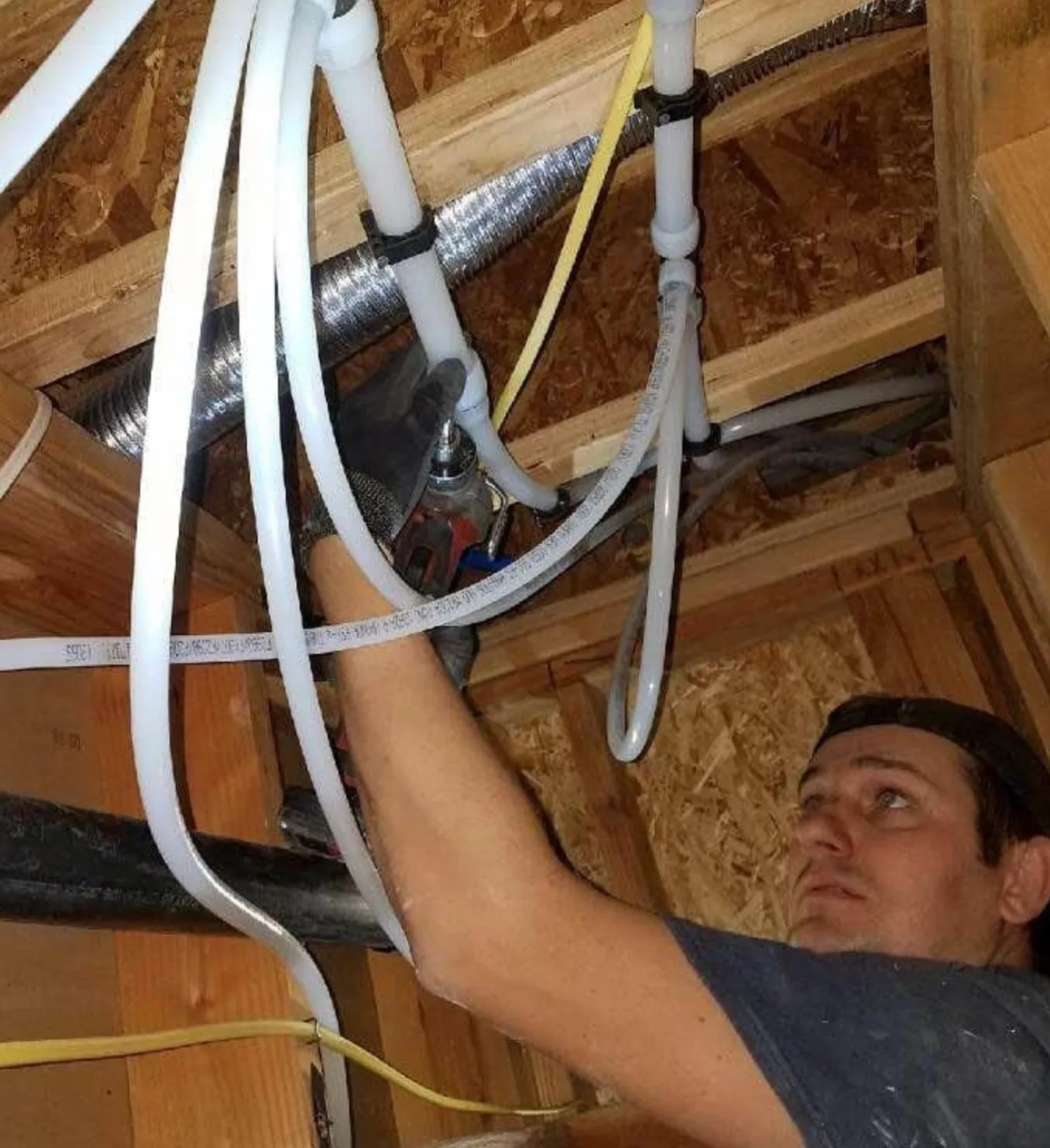
Support spacing matters for both performance and noise. Poorly supported PEX can sag, trap air in hydronic systems, create unwanted contact points, or amplify movement noise during hot water draws. Use approved hangers or straps that do not pinch the tubing. Avoid metal-on-plastic contact where vibration or movement is expected. Where the tubing runs through studs, keep it centered and use protective nail plates when the hole is close to the face of the framing to prevent drywall screws or trim nails from puncturing the line.
Protect PEX during construction. Many “mystery leaks” in new builds come from other trades stepping on tubing, dropping tools on it, or scraping it with ladders and sheet goods. If tubing is installed before drywall, keep it organized, secured, and protected in high-traffic areas. In mechanical rooms, add guarding where storage or foot traffic could impact exposed lines.
Chemical damage precautions: sealants, solvents, oils, and contaminated environments
PEX is resistant to many substances found in normal indoor plumbing environments, but it is not universally chemical-proof. Certain oils, solvents, petroleum products, and aggressive compounds can attack plastics, causing swelling, softening, cracking, or loss of strength over time. Avoid direct contact between PEX and petroleum-based products such as gasoline, kerosene, fuel oils, cutting oils, some asphaltic materials, and many solvents and paint thinners (for example acetone, toluene, and xylene). Treat any unknown chemical as incompatible until verified by the tubing manufacturer.
Be careful with sealants and firestopping materials. Use only sealants, caulks, and penetration products that are approved for contact with PEX by the manufacturer or are specifically listed as compatible. This is not an area for guesswork. Some thread sealants and pipe dopes are formulated with solvents or additives that can migrate into plastic components, especially if applied excessively. If you must use a thread sealant on metal threads near plastic, use the product and method the manufacturer recommends and keep it off the tubing itself.
Avoid installing PEX in heavily contaminated soils or environments with unknown chemical exposure. If the job requires direct burial or contact with soil, verify that the specific tubing is listed for that use and that the soil conditions are appropriate. In garages, industrial spaces, and workshops, consider exposure to fuels, oils, cleaners, and corrosive atmospheres. If the environment includes ammonia or other corrosives, keep fittings and tubing away from the source and use protective routing.
Chlorine and oxidants deserve special attention. Potable water disinfectants are necessary, but high levels of chlorine or chloramines, high water temperature, and continuous flow conditions can accelerate oxidative aging in plastic piping. This is one reason recirculation systems and high-temperature hot water loops must be designed carefully. Use products tested and listed for the local disinfectant type and the operating conditions, and avoid running hot water hotter than necessary for safety and longevity.
Rodents and pests: a real risk that needs a plan
Rodent damage is real. Rats, mice, and other pests can chew through PEX. This is not a theoretical problem; it happens in crawlspaces, attics, garages, and wall cavities—especially where food sources, nesting areas, or entry points exist. If pests can access the tubing, you should assume they eventually will.
Practical mitigation starts with routing and protection. Avoid leaving PEX exposed in areas where rodents travel. Use sleeves or conduits in vulnerable runs, and consider rigid pipe or protective coverings where exposure cannot be avoided. Seal penetrations, close gaps at sill plates and around utility entries, and coordinate with pest control when the property has a history of rodent activity.
If there is known rodent pressure, treat it like any other site condition that changes material choice. In some locations, switching certain exposed segments to copper, installing protective plates, or boxing-in runs may be more cost-effective than repeated repairs. The key is not to pretend it won’t happen; plan for it.
After installation: pressure testing, flushing, and long-term reliability steps
Once the system is installed, test it properly and document what you did. Follow the manufacturer’s pressure test procedure and any local inspection requirements. A proper test catches bad crimps, incomplete expansions, poorly seated fittings, and damaged tubing before the walls close. Take the time to walk every run and every connection during the test, especially at transitions and in mechanical rooms where a small seep can become a big problem later.
Flush the system to remove debris. Construction debris, plastic shavings, and grit can damage fixture cartridges, clog aerators, and cause valves to fail prematurely. A clean flush protects the downstream components that customers notice first (shower valves, faucets, appliances), and it reduces call-backs that get blamed on “water pressure” when the real issue is blockage.
Label key components. If you install a manifold, label each circuit clearly. If you add isolation valves, note which areas they control. Good labeling turns future service into a 10-minute job instead of a two-hour guessing session. If the building has recirculation, label the pump, check valve orientation, and balancing components so future adjustments don’t accidentally create hot water crossover or constant pump deadheading.
Finally, protect the installation for the life of the building. That means maintaining insulation where required, keeping mechanical rooms tidy so tubing doesn’t get snagged or crushed, and avoiding chemical storage near exposed piping. If remodeling happens later, remind the owner that hidden piping exists: fasteners and saws are the enemy. A small amount of education up front can prevent a disaster during a future DIY project.
Environmental and fire considerations
PEX has different end-of-life and fire behavior considerations than copper. Recycling pathways are not as straightforward as metal piping, and local recycling options vary. In a fire, plastics can melt and produce smoke; this is one reason codes address fire-stopping, penetrations, and required protection in certain assemblies. None of this means PEX is “unsafe” when installed correctly—it means it must be installed as a listed system and protected according to the rules of the building and the jurisdiction.
If you are working in multi-family, commercial, or any project with rated assemblies, treat penetrations and fire protection as part of the plumbing scope, not as an afterthought. Use listed penetration systems, keep required clearances, and coordinate with the inspector and other trades. A perfectly installed plumbing system can still fail inspection if the penetrations are wrong, and fixing it after the fact is expensive.
The practical takeaway: PEX is an excellent material when it is treated like an engineered system—rated, protected, and installed according to manufacturer and code requirements. If you respect the limitations (temperature, pressure, UV, mechanical and chemical exposure), you get the benefits with minimal downside.
Super Brothers Quality
Choose Super Brothers Plumbing Heating & Air because we use top-tier materials, deliver honest workmanship, and back every job with a real warranty. Our pricing is fair and transparent—no hidden fees, ever.
We pull the permits, build to California code, and pass inspection. Our licensed, highly experienced team handles full plumbing and heating/air replacements and installations, so the job’s done right the first time.
- Top-tier materials
- Honest, quality service
- Workmanship warranty
- Fair, transparent pricing (no hidden fees)
- Permits handled; California code compliant; passes inspection
- Licensed & experienced in plumbing and HVAC installs





Refer Friends, Reap Rewards

Share our expert plumbing services with friends and family. For every successful referral, you earn cash rewards. Refer Now

Ready To Experience Super Brothers Difference! Let’s Start a Conversation!
Financing Options

Super Brothers offers an Installment Payment Plan with 0% Interest for Projects over $1000

Fin tech company that provides payment solutions in the home improvement sector.

Flexible financing for your next home improvement project

Wells Fargo Home Projects Credit Card