Keeping a home warm is not just about heating performance
—it is about preventing heat from disappearing in the first place. The highest percentage of residential warmth is lost upward, escaping through attic cavities, ceiling corridors, duct gaps, recessed lighting penetrations, roof-deck channels, and unsealed framing pockets. When a home lacks adequate insulation, warm air behaves similarly to water under pressure: it seeks the path of least resistance and disperses quickly. That means your heating system works harder, cycles longer, draws more energy, and creates higher seasonal expenses without actually improving comfort.A blown-in attic insulation installation directly solves this issue at the point of greatest vulnerability—the attic. Instead of relying solely on heaters to generate more warmth, this method focuses on blocking heat loss, stabilizing indoor temperature, and reinforcing the upper thermal barrier efficiently. Blown-in insulation fills irregular spaces more evenly than traditional layered insulation, locking into corners, sealing micro air corridors, fortifying ceiling joints, reducing HVAC workload, and creating a measurable improvement in comfort immediately after installation.Because early-season demand can compress scheduling access later in the year, acting now ensures your home receives airflow-blocking density, seam-sealing coverage, and thermal protection from the very first cold month instead of reacting to leaks in heat retention after seasonal energy strain has already begun.
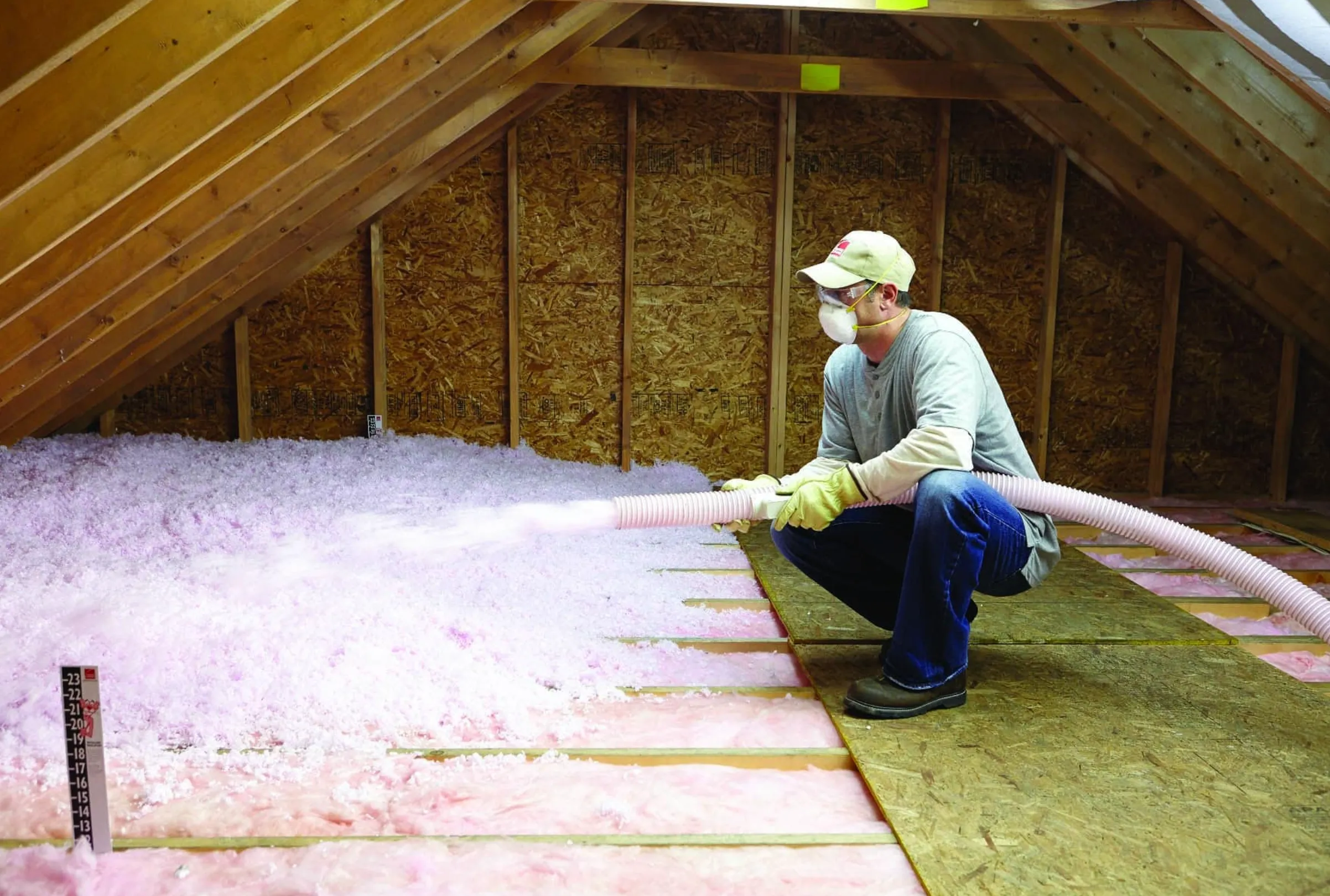
Why Blown-In Insulation Outperforms Traditional Insulation for Attic Coverage
Attics are not flat, uniform spaces. They are fragmented structural zones that contain wiring pathways, ventilation partitions, framing clusters, support beams, duct passages, nail-plate barriers, and uneven distribution chambers where older insulation may already be compacted, partially settled, or degraded into thin density zones. Traditional rolled or layered insulation can leave air channels behind because it relies on pre-cut dimensions that do not adapt to unpredictable cavity shapes. Even when installed properly, physical layering can shift, compress, or deteriorate unevenly over time, creating gaps in insulation integrity where warm air continues to escape upward.
Blown-in insulation works differently. It is injected into attic space using airflow-pressurized distribution, allowing the material to spread dynamically, fill cavities equally, eliminate trapped air corridors, improve thermal density, and coat framing zones evenly from all angles. Instead of sitting in horizontal layers, it creates a fully packed insulation cluster that locks into seams and prevents vertical airflow loss intelligently. This method also restores thermal balance around recessed lighting joints, electrical penetrations, roof framing corners, attic bypass partitions, duct surface corridors, and other zones where air movement typically accelerates infrared heat loss.
The end result is deeper gap penetration, better attic corner sealing, denser thermal resistance, more even seam blocking, reduced HVAC cycling demand, fewer cold ceiling spots, minimized heater strain, reinforced roof-deck stability, instant improvement in indoor warmth, and longer seasonal energy reliability from the first installed month instead of gradual degradation mapping deeper.
How Blown-In Attic Insulation Reduces Heating Workload and Seasonal Costs
Every heater is designed to perform, not compensate. When attic space fails to retain heat, your heating system enters what can be described as a compensation loop, where it heats rapidly, loses warmth upward, reheats, loses warmth again, and continues cycling in exhaustion logic rather than efficiency logic. This causes the blower motor, internal heating springs, appliance connectors, thermostat reaction chambers, and duct velocity corridors to work under extended strain.
A blown-in attic insulation installation resets that cycle. By increasing attic thermal density, the home stops losing warmth into roof cavities, ceiling beams no longer act as cold exchange panels, duct insulation corridors remain stable, warm air stays inside longer, and heaters run shorter cycles to maintain comfort. When the attic is sealed into a stable thermal cluster, incoming cold air no longer pulls stored warmth upward through negative pressure corridors, allowing temperature stability to hold longer with less energy draw. Homes experience reduced heater operation time, lower heat displacement mapping, balanced air density corridors, fewer temperature fluctuations, extended HVAC longevity, quieter system discharge behavior, protected appliance intake zones, reduced seasonal energy consumption, improved indoor comfort output, and immediate reliability from the first installed month.
Most importantly, your energy expenses start decreasing immediately—not in theory, not over time, but right after installation because the system finally works as intended.
The Installation Process: What Happens When Attics Are Sealed Correctly
The blown-in attic insulation process begins with clearing old degraded insulation partitions when needed, evaluating roof-deck framing corridors, measuring cavity depth behavior, detecting attic airflow leaks, stabilizing external thermal tension clusters, testing air pressure movement, and preparing the attic surface for full density insulation alignment. The insulation material is then injected into empty or weak cavities using airflow-distribution pressure logic, allowing it to expand equally into framing corridors, seal attic bypass partitions, reinforce duct insulation chambers, eliminate trapped airflow pockets, build even seam density, fill wiring channel chambers safely, align thermal clusters across attic floors, stabilize attic velocity behavior loops, secure air modulation balance, reinforce temperature protection nodes, prevent warmth displacement upward, reduce HVAC strain, lock the home into full thermal reliability, and restore attic equilibrium coverage effectively.
Unlike traditional insulation that relies on placement, blown-in insulation relies on penetration, distribution, and adaptive sealing. That means coverage reaches areas that horizontal layering simply cannot access. Attics behave like sealing containers, where heat stops escaping instantly after installation, preventing attic-to-roof expansion tension, improving overall warmth mapping, balancing pressure resistance inside ceiling connectors, and resetting temperature retention logic for every winter month ahead.
Early-Season Scheduling for Insulation Upgrade Reliability
Scheduling blown-in attic insulation before peak cold weather gives technicians the opportunity to diagnose insulation failure corridors calmly instead of under emergency urgency. Seasonal energy demand has not yet hit full escalation, attic stress corridors have not yet hardened into large contraction behavior loops, HVAC modulation springs are still within flexible performance range, and connectors have not yet expanded under seasonal strain.
Booking service now means faster appointments, more strategic diagnostics, relaxed installation pacing, higher calibration accuracy, fresh seal implementation, no scheduling backlogs, no emergency crowding, immediate temperature improvement, instant attic-density sealing, better HVAC preservation, reduced energy draw from the first cold month, and prevention of compaction failure loops before they form deeper.
Later insulation appointments—especially mid-winter—often mean working when attic airflow has already thinned heat retention logic and home systems are strained from season-long performance exhaustion. Acting now resets the system before it fights the season; acting later forces the system to recover after it has already lost months of efficiency.
How Poor Attic Insulation Impacts the Entire Home’s Climate Balance
A weak attic barrier does not just affect the attic—it affects the entire climate behavior of a home. Without proper insulation, ceilings become cold-impact panels, room temperature has uneven retention corridors, heaters enter overcompensation loops, ductwork experiences temperature drag, recessed lighting joints leak warm air upward, roof decks absorb negative air mapping corridors, moisture clusters form where cold air meets escaping heat, interior wall connectors echo thermal drop behavior, HVAC blowers work harder, thermostat chambers react inconsistently, and overall home warmth mapping remains unstable.
Blown-in insulation repairs this entire chain reaction by fortifying the attic into a consistent thermal container, sealing invisible airflow leaks that pull indoor warmth upward, and ensuring that every room beneath it stays supported by a reliable climate-defense layer. An insulation upgrade restores interior equilibrium so that warmth stays evenly distributed instead of escaping upward through exhausted attic corridors.
This installation is not just a seasonal improvement—it is home-wide climate correction, delivered immediately, and lasting across all heating months without patching delayed failures that become more disruptive when insulation is ignored too long.

What Happens to Plumbing and HVAC Systems When Pressure and Temperature Corridors Stabilize
One of the most understated benefits of upgraded attic insulation is its effect on HVAC and household system stability. When an attic becomes pressure-stable and thermally dense, HVAC corridors discharge smoother, heating springs do not enter exhaustion loop mapping, system connectors remain protected, airflow chambers balance more evenly, internal HVAC springs preserve longer, blower velocity corridors operate quietly, duct stress clusters decline, pipe temperature corridors retain balance, and appliances that depend on stable water or airflow intake logic no longer face pressure-based exhaustion due to temperature instability corridors.
Although insulation is not a plumbing component, its installation prevents thermal pressure change chain reactions that wear down valves, springs, and appliance corridors prematurely. A climate-stable attic helps maintain internal system modulation balance in winter months that follow.
How Insulation Upgrade Protects Your Roof, Walls, and Energy Reliability Long-Term
A properly insulated attic introduces a home defense layer that supports structural reliability season after season. When insulation density meets full coverage alignment, roof decks absorb less interior temperature drag, outer surface corridors resist pressure echoing thermal drops, wall tension partitions do not contract into frost corridor clusters, ceilings retain comfortable warmth mapping axis evenly, HVAC connectors behave smoother under seasonal usage mapping, internal heating springs preserve longer, and seasonal energy draw reduces instantly once the home insulation corridor resets into equilibrium mapping stability.
More importantly, insulation failure corridors are eliminated before they worsen, preventing long-term thermal splits, seal drift, framed cavity misalignment, moisture tension pockets, ceiling cold-impact compaction loops, and HVAC strain exhaustion corridors later. The result is a home that stays warmer, safer, quieter, energy-smarter, structurally protected at key joints, demand-balanced for all upcoming heating months, and more efficient season after season after installation.
Signs Your Home Already Needs a PRV-Style Reset in Attic Thermal Reaction (Explained in Heat Logic, Not Valve Logic)
When attic insulation is failing, the symptoms resemble systemic feedback loops rather than single failures. Indoor warmth rises too fast and vanishes too fast, ceiling surfaces radiate cold into rooms, HVAC blowers generate warmth longer than comfort actually increases, room temperatures fall unevenly, attic density carries thin airflow stress noise, heater modulation enters compensation loop mapping behavior, seasonal bills rise without performance benefit, and overall climate reliability remains unstable.
If your home exhibits any of these patterns, the problem is not additional heat generation—it is lost heat retention. Blown-in insulation installation solves the root cause by sealing every corridor above your ceiling where warmth quietly dissipates.
Why Acting Now Is a Recommendation
Installing blown-in attic insulation is not about future predictions—it delivers instant thermal correction, direct energy draw reduction, measurable indoor temperature improvement, quieter HVAC behavior, less stress on heating springs, longer appliance preservation, and a home that retains warmth evenly from the first month of installation. Waiting turns heat retention failure into a mid-season disruption later. Acting now is a decision that protects comfort today, upgrades infrastructure immediately, and prevents further attic loss corridors from mapping deeper seasonal strain later.
Schedule Your Blown-In Attic Insulation Installation This Month
Attic insulation service remains open, allowing homeowners to secure a professional technician while installation density materials and appointment availability are still accessible. Scheduling today ensures a full attic diagnostic, instant insulation replacement where required, equal cavity sealing, velocity-brake airflow stress reduction, internal temperature equilibrium restoration, HVAC preservation logic improvement, and a fully fortified attic barrier that begins working immediately after installation instead of losing months of seasonal performance first before repair later.
This is a direct home-upgrade transaction, delivering immediate comfort improvement, instant energy reliability correction, and whole-home protection gating for each winter month that follows.
What You Can Expect in the First 30 Days After Insulation Upgrade
A blown-in attic insulation installation begins paying back immediately. Not slowly, not theoretically, not gradually—instantly. The very first month after insulation correction delivers quieter HVAC discharge logic, stabilized indoor temperature mapping, reduced heater cycle duration, balanced airflow chambers, stronger roof cavity resistance, pressure-stable attic corridors, elastic rubber connector preservation logic underground plumbing intake bar mapping axis stabilized internally for winter months ahead, less strain on HVAC springs, fewer temperature drag response errors, warmer rooms, cooler ceilings, better energy balance partition reliability, and total thermal equilibrium mapping stability across the entire heating season.
Lock In Warmth Today
This upgrade protects your home today, reduces system strain instantly, and stops heating loss corridors from compounding behind ceilings and cavity partitions silently. A blown-in attic insulation installation is the fastest, smartest, and most effective upstream decision you can make for your home this month. Your heater deserves support—not overtime. And your home deserves warmth that stays inside.
You can still book your insulation upgrade before late-year demand compresses scheduling access. The results start immediately after installation. Schedule your blown-in attic insulation installation now and seal your home for every winter month ahead.
Super Brothers Quality
Choose Super Brothers Plumbing Heating & Air because we use top-tier materials, deliver honest workmanship, and back every job with a real warranty. Our pricing is fair and transparent—no hidden fees, ever.
We pull the permits, build to California code, and pass inspection. Our licensed, highly experienced team handles full plumbing and heating/air replacements and installations, so the job’s done right the first time.
- Top-tier materials
- Honest, quality service
- Workmanship warranty
- Fair, transparent pricing (no hidden fees)
- Permits handled; California code compliant; passes inspection
- Licensed & experienced in plumbing and HVAC installs





Refer Friends, Reap Rewards

Share our expert plumbing services with friends and family. For every successful referral, you earn cash rewards. Refer Now

Ready To Experience Super Brothers Difference! Let’s Start a Conversation!
Financing Options

Super Brothers offers an Installment Payment Plan with 0% Interest for Projects over $1000

Fin tech company that provides payment solutions in the home improvement sector.

Flexible financing for your next home improvement project

Wells Fargo Home Projects Credit Card